Google Drive to Cloud GPU: An rclone Pipeline for AI Video Jobs
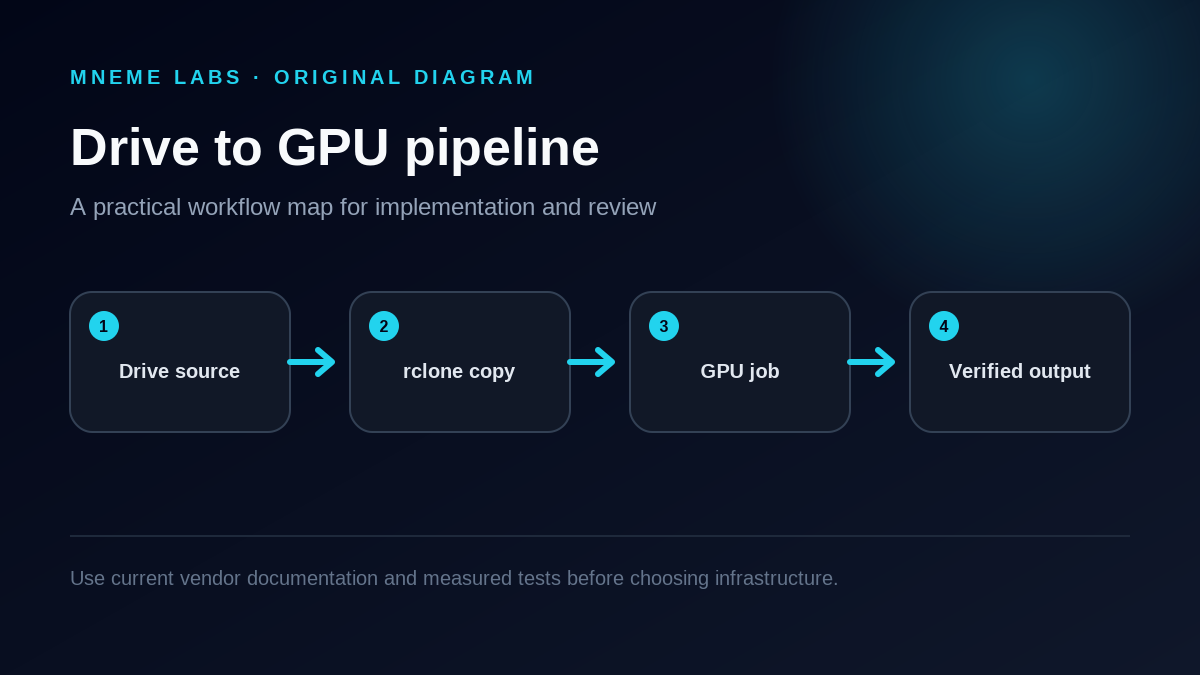
Move footage from Google Drive to a rented GPU and back with rclone: your own client ID, headless auth, scoped remotes, upload limits, and a verified job.
Mneme Labs
Creative Claw, local AI workflows, game development, and the systems we build around real projects.
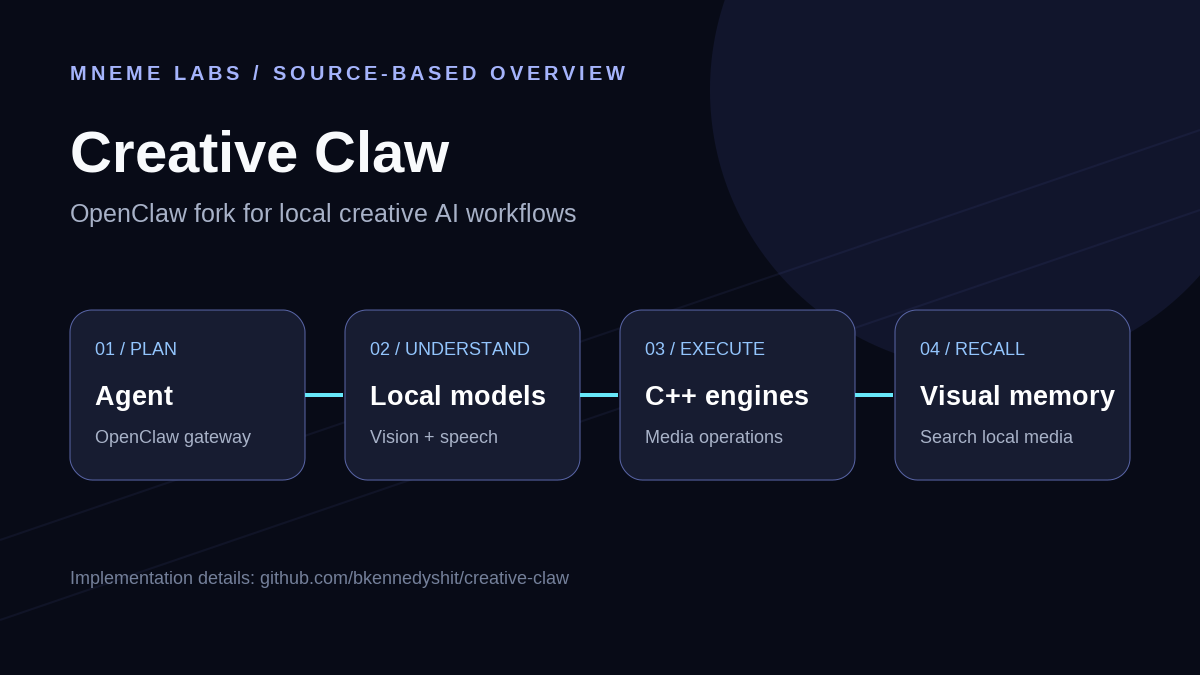
How the fork joins local perception, native media processing, visual memory, and the hardware needed to run them.
Read the overview →Series / Private AI & cloud GPU
Move footage from Google Drive to a rented GPU and back with rclone: your own client ID, headless auth, scoped remotes, upload limits, and a verified job.
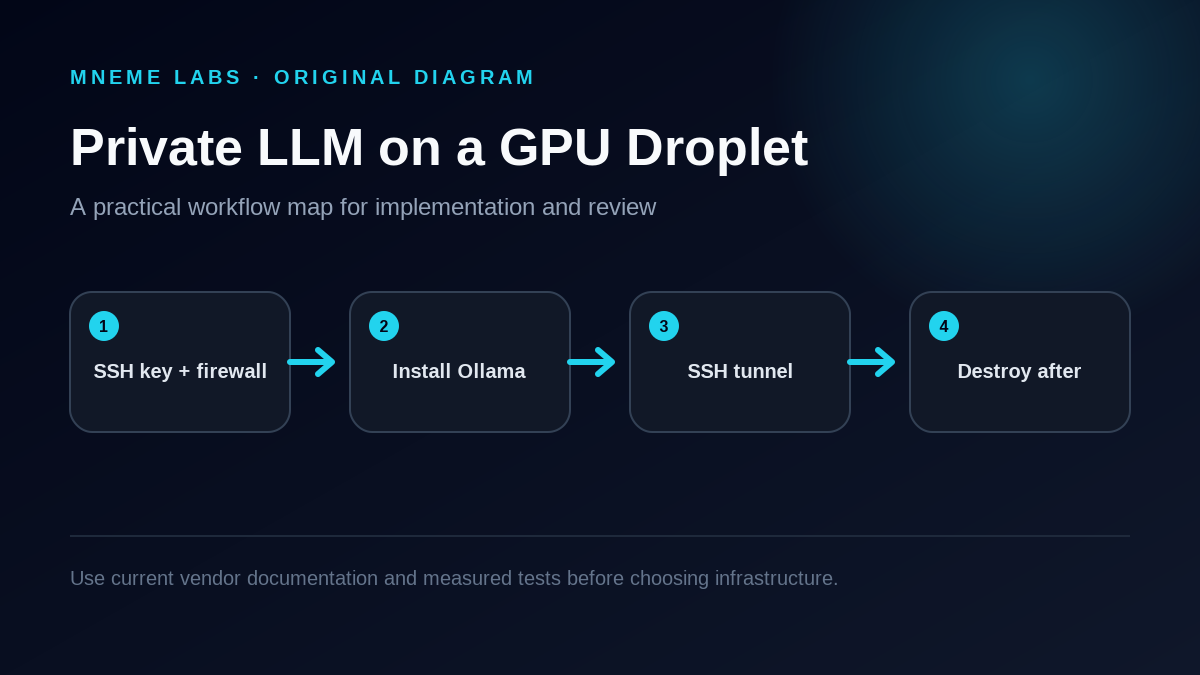
Deploy Ollama on a DigitalOcean GPU Droplet: size by VRAM, keep the API private over SSH, script a rebuild, and avoid the powered-off billing trap.
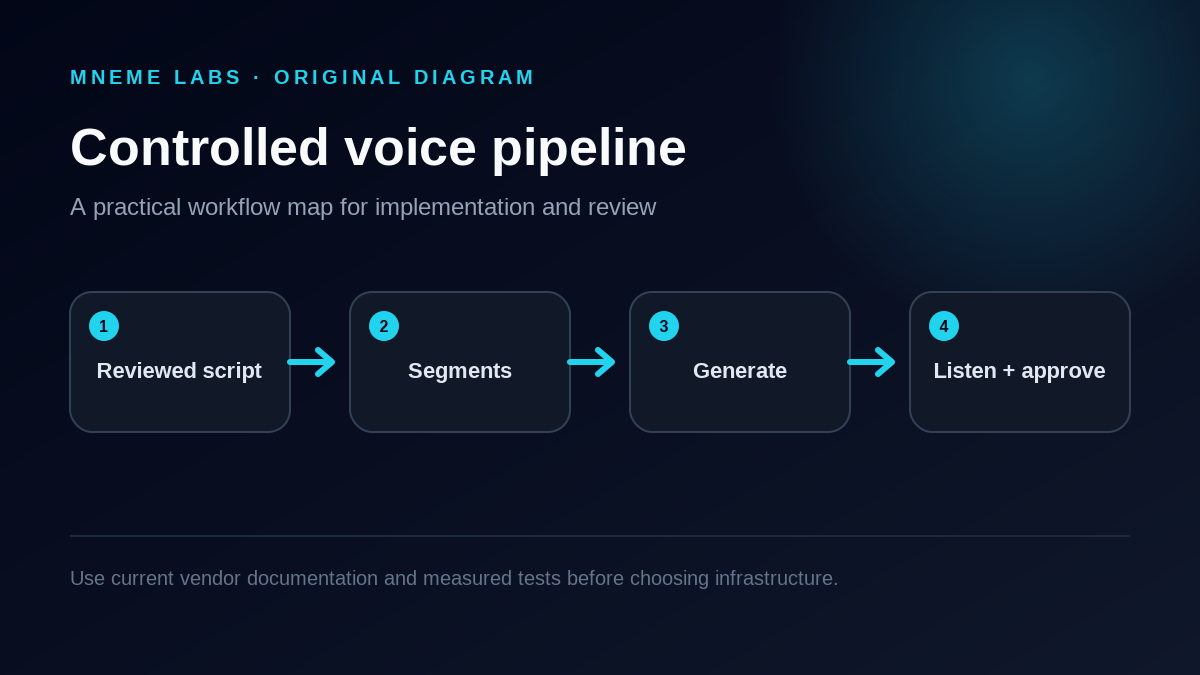
A production workflow for scripts, consent, pronunciation, segment regeneration, audio review, and automated narration.
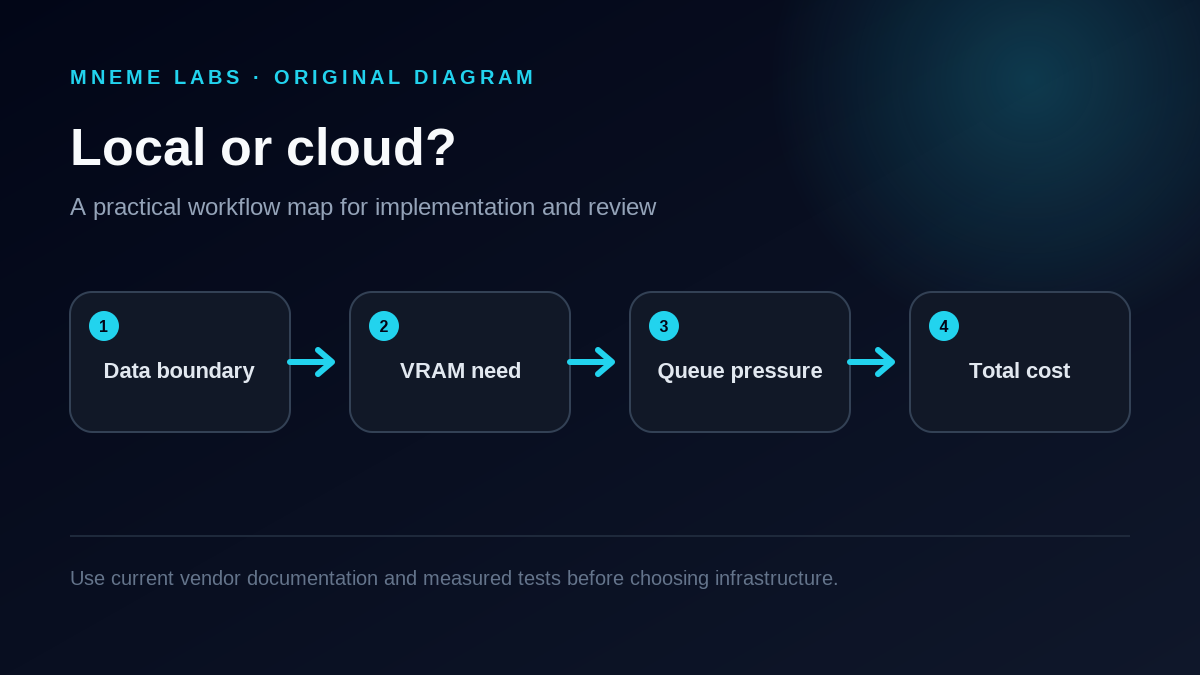
A practical framework for deciding when to own compute, when to rent it, and which hidden costs belong in the comparison.
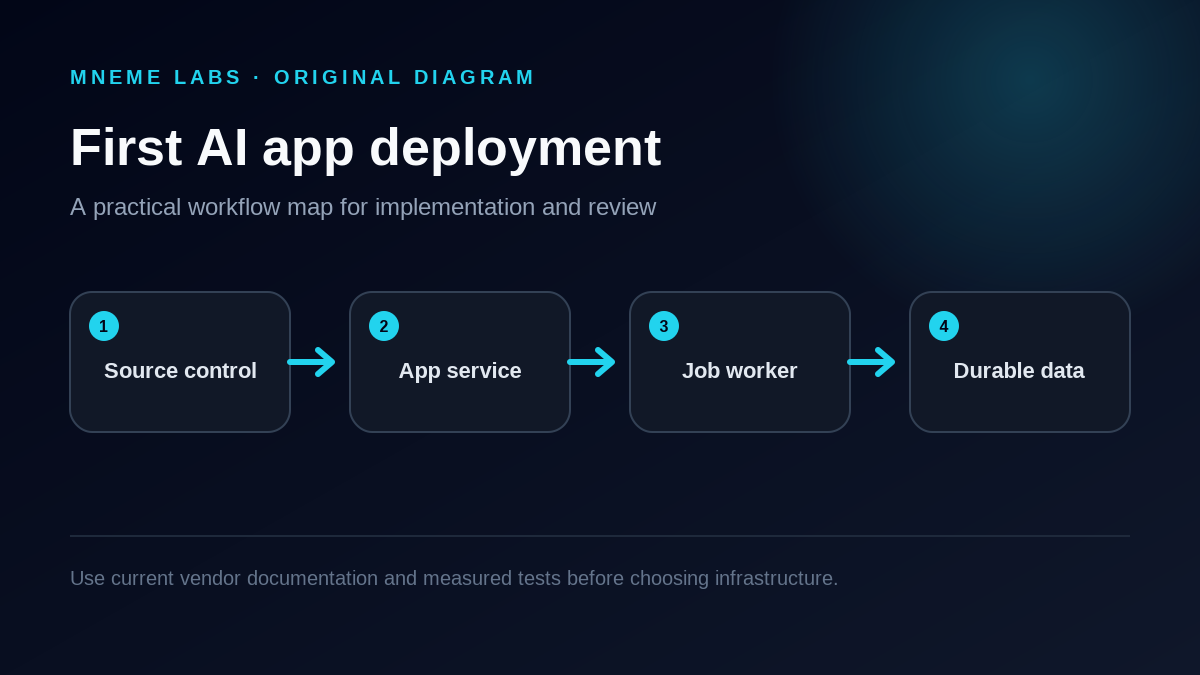
A beginner-friendly path from a working local AI app to a secure public deployment with jobs, logs, limits, and rollback.
A production checklist for hosting AI APIs and agent services: queues, secrets, health checks, rate limits, backups, and recovery.
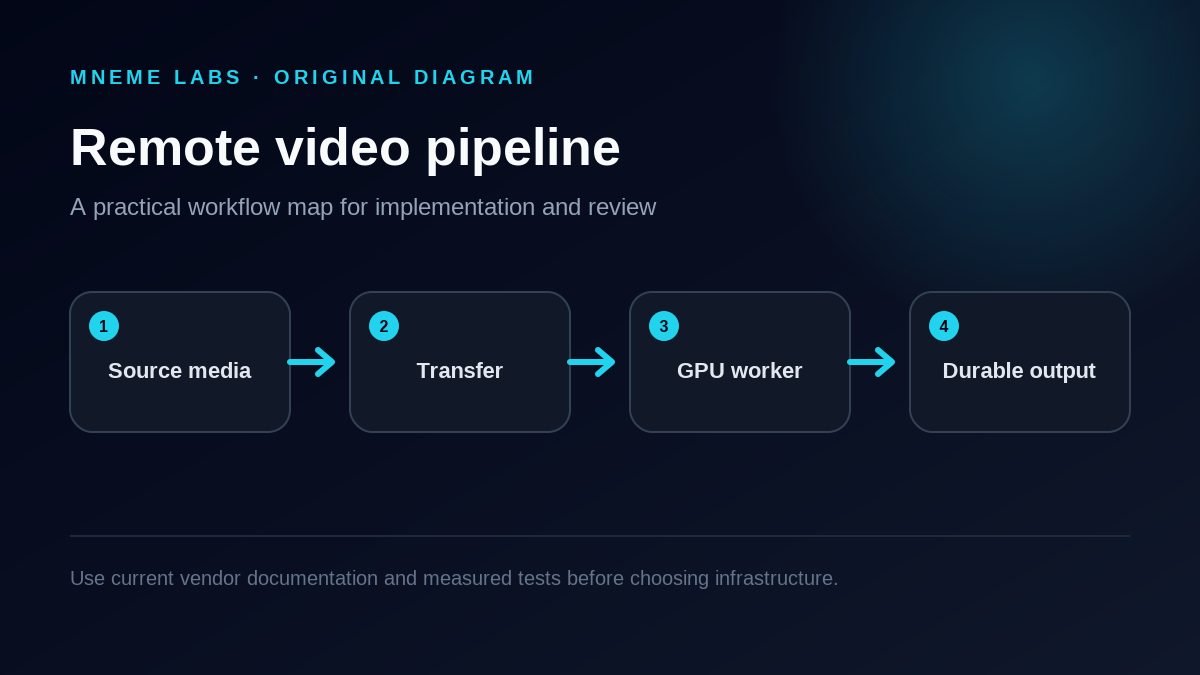
A system-level explanation of storage, job queues, GPU workers, checkpoints, and review in a remote AI video pipeline.
Design a practical mobile connectivity stack for uploads, livestreams, remote AI jobs, and field production without pretending one carrier or one connection can cover every failure.
Where an on-demand GPU can extend a local AI video workflow, what it cannot fix, and the measurements to collect before calling it cost-effective.
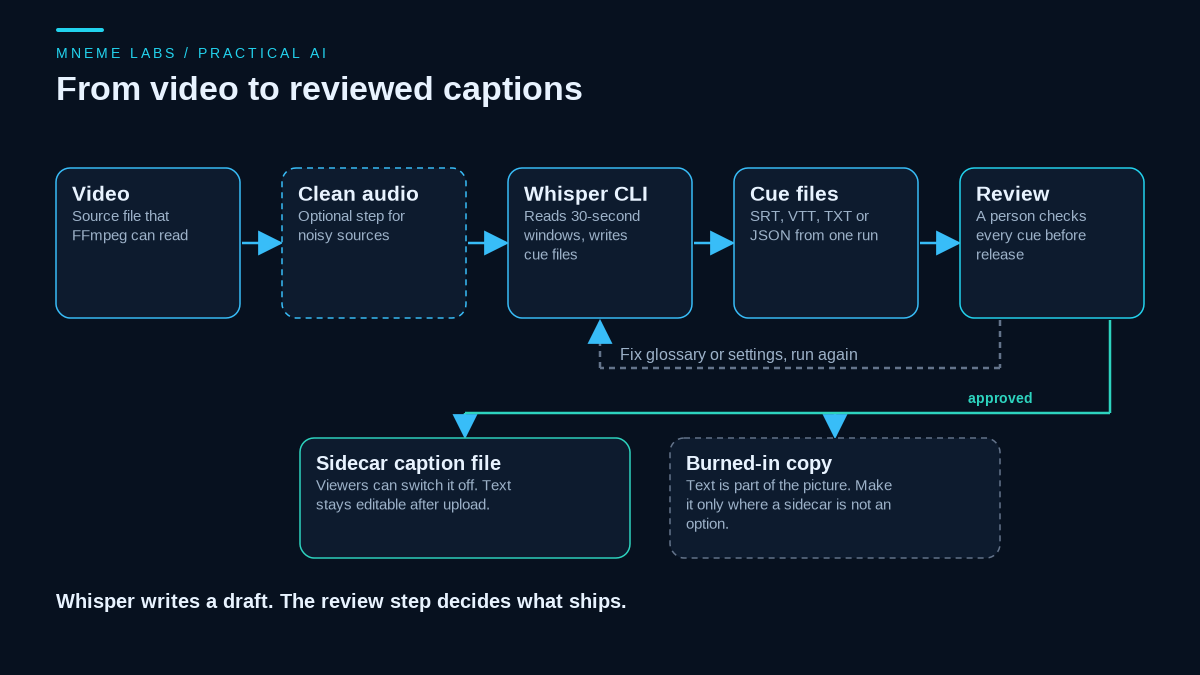
Run OpenAI's open-source Whisper on your own machine to draft SRT and VTT captions, check the cues with a small script, and decide between a sidecar file and burned-in text. Includes tested review code and the limits of the model.
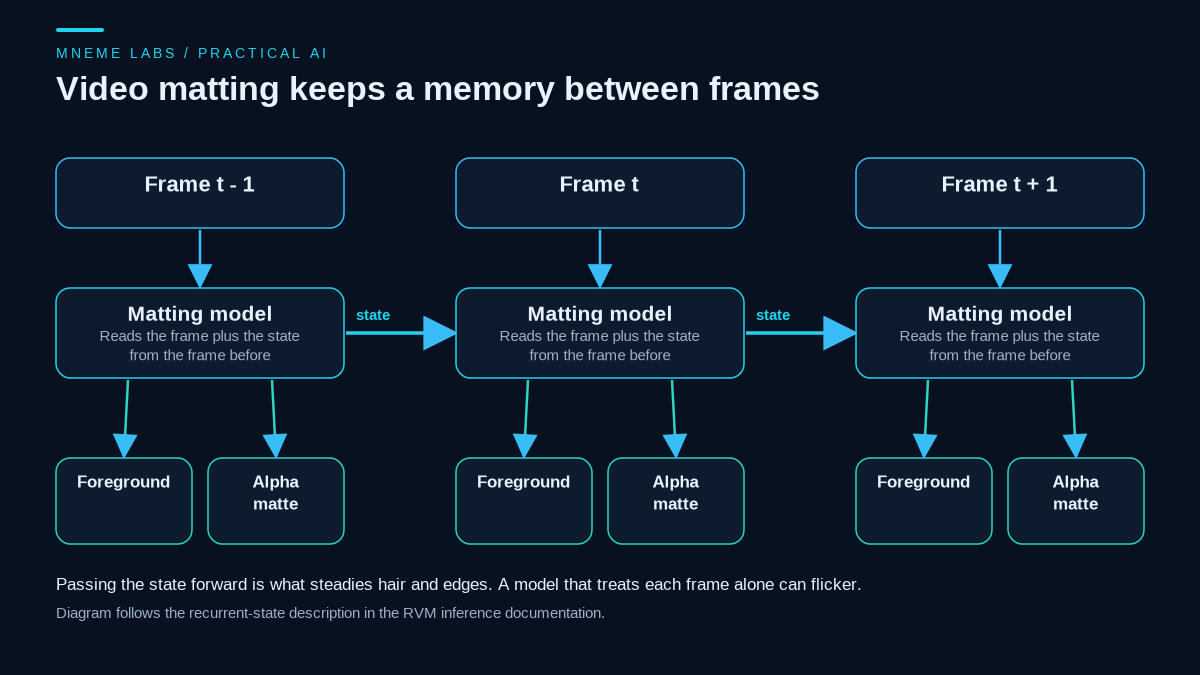
Use the open-source Robust Video Matting model to cut a person out of a clip, merge the matte with FFmpeg, and composite on a new background. Covers settings, the GPL-3.0 license, tested FFmpeg code, and where matting fails.
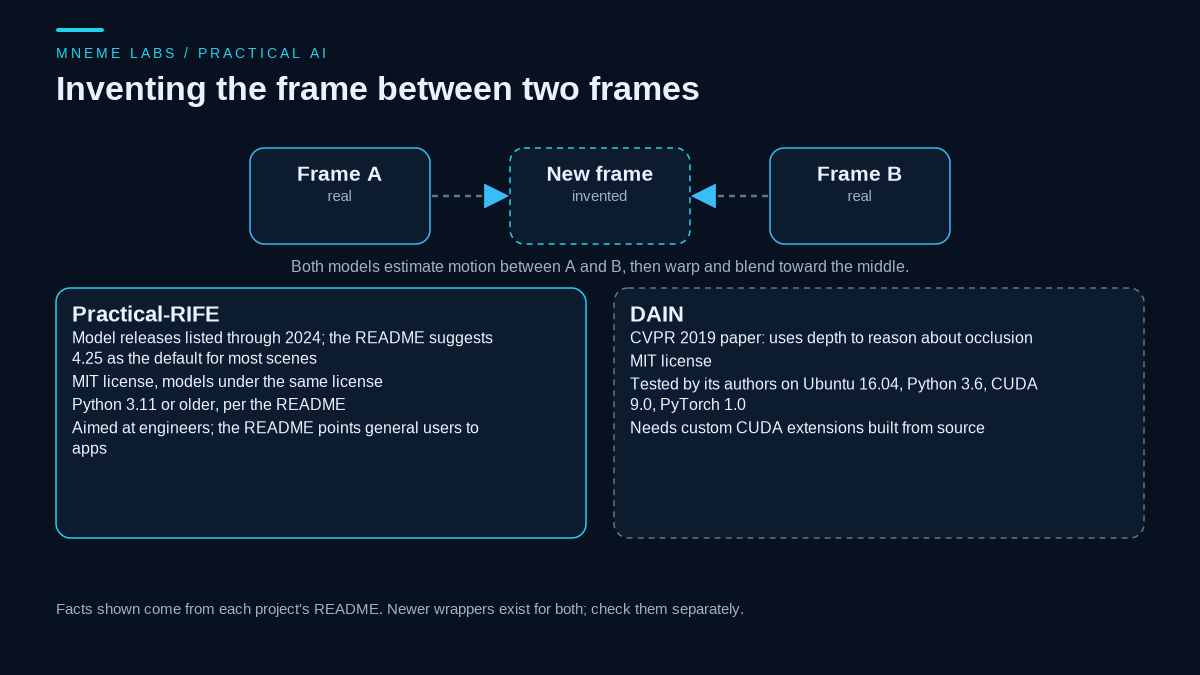
Compare Practical-RIFE and DAIN using what their repositories actually state, then run a held-out frame test and a scene-cut check on your own footage. Includes tested scripts and the failure cases for fast action.
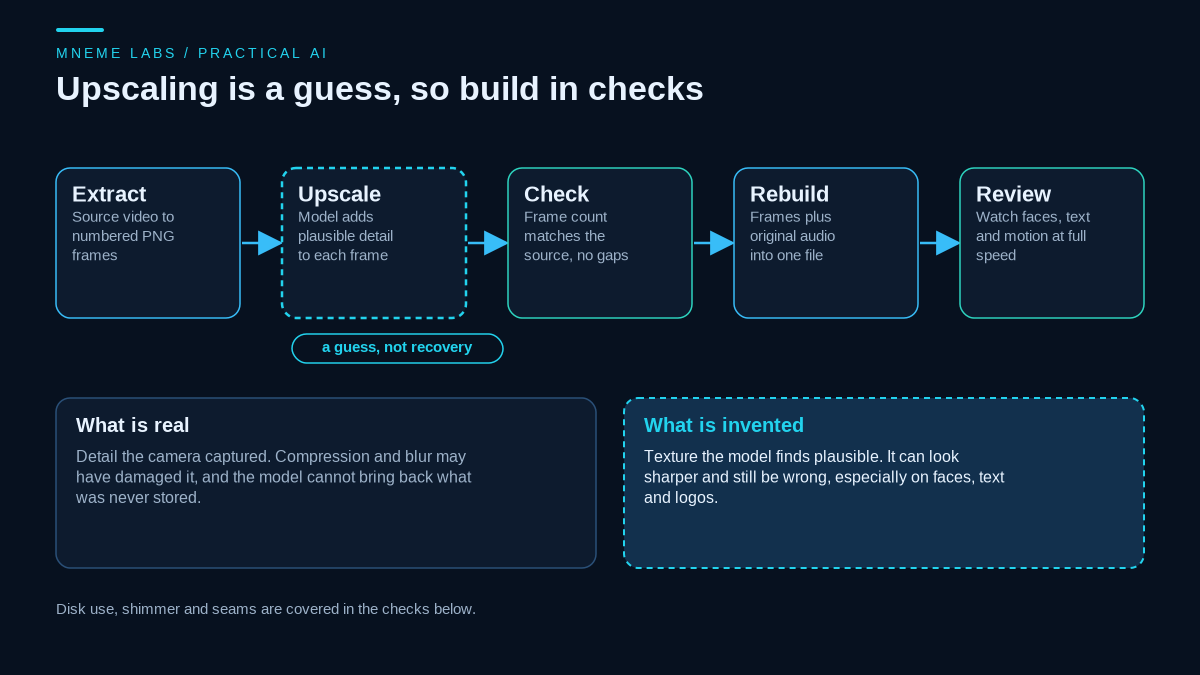
Extract frames, upscale them with the Real-ESRGAN ncnn Vulkan tool, verify the sequence, and rebuild with the original audio. Covers scale math, disk use, licenses, and why upscaling guesses detail instead of recovering it.
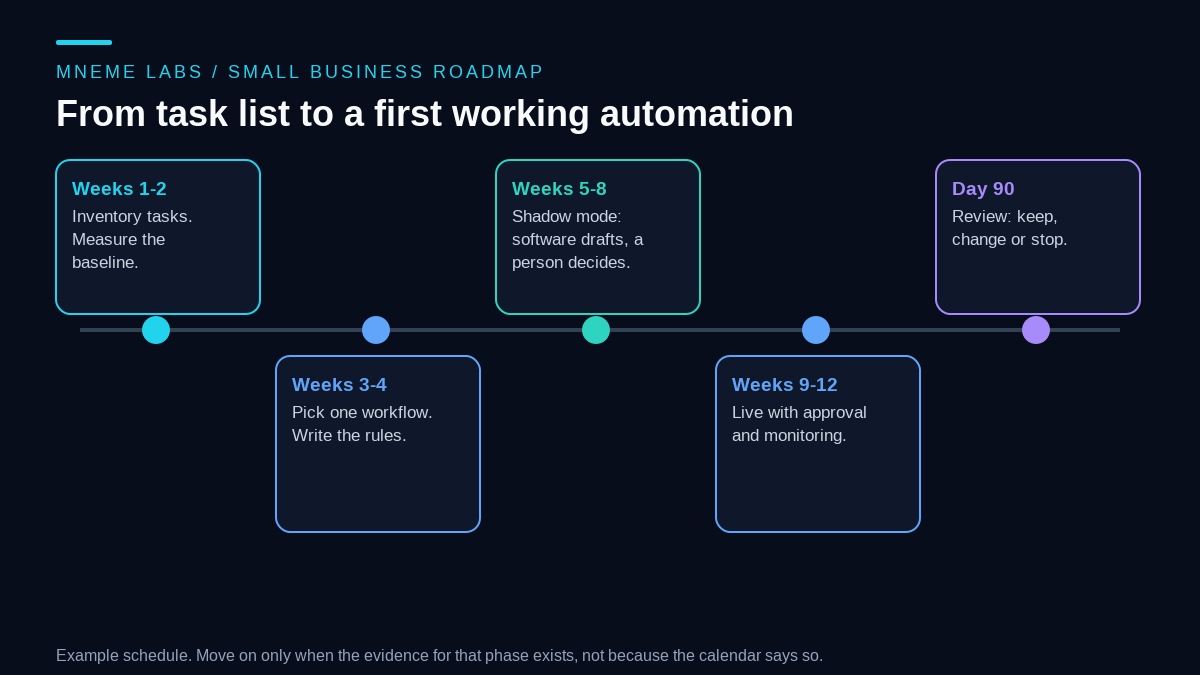
A 90-day plan for adding AI automation to a small business: inventory tasks, rank them with a tested scoring sketch, run the first workflow in shadow mode, go live with approval, and decide at day 90 whether to keep, change or stop. Covers access, data, ownership and stop rules.
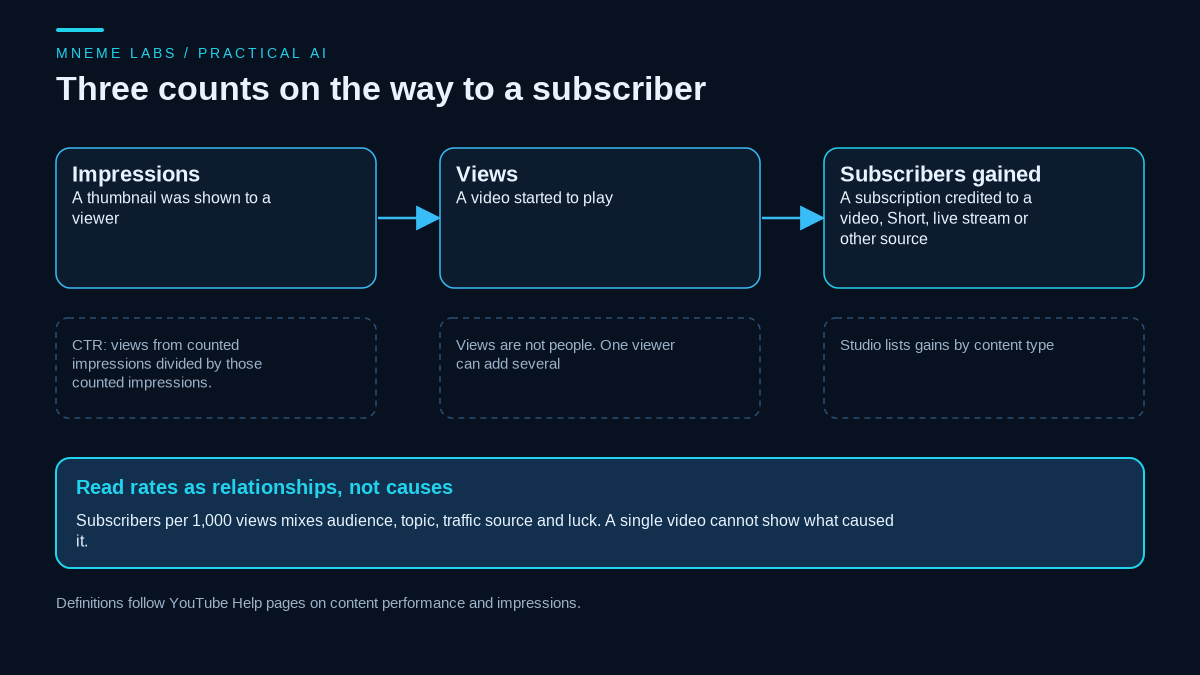
No tool can promise 1,000 subscribers by a date. This guide shows how to read YouTube's subscriber and impression reports, use a small script to list subscribers per 1,000 views next to the actual counts, and understand what the 1,000 subscriber threshold does and does not mean.

That was my life: the physical grind of riding, followed immediately by the mental grind of freelancing. I treated my business like a hamster wheel.

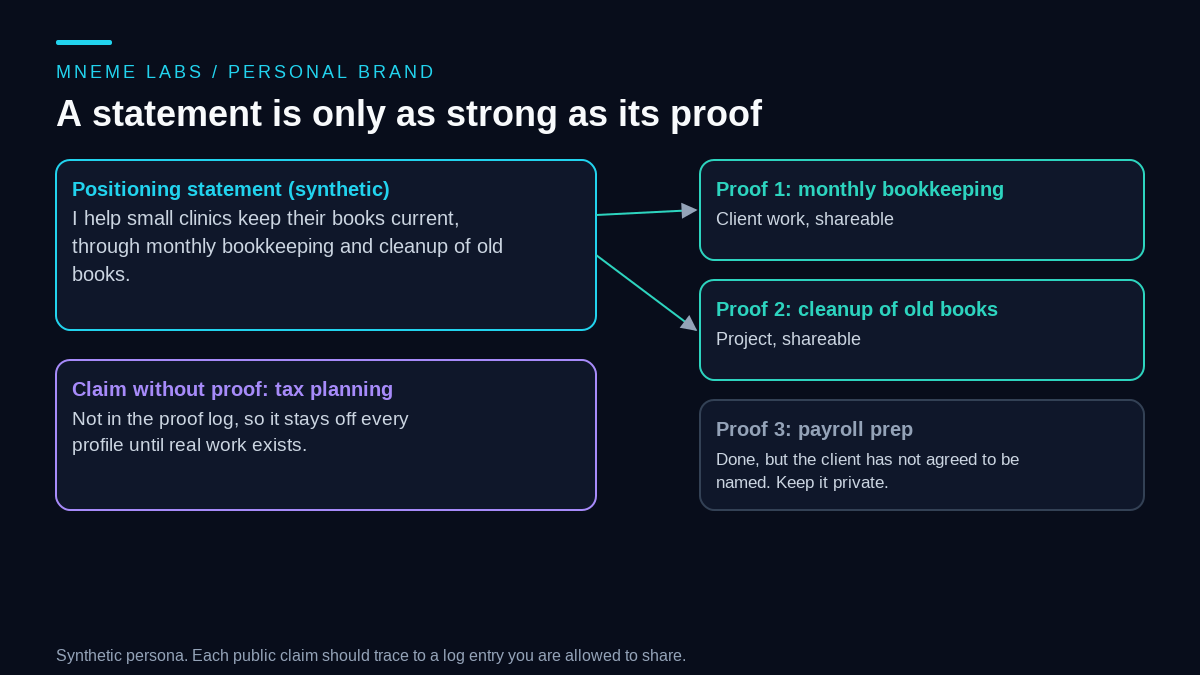
A personal brand that holds up is a consistent professional identity backed by evidence you can show. This guide builds a positioning statement, a proof log of real work, a profile consistency check you can run in code, and a monthly loop where AI drafts and you decide. Includes a tested Python sketch on a synthetic persona.
For years, I tried to force myself into one box or the other. I was either a rider trying to edit video until 3 AM, or an engineer staring at code while ignoring my bike gathering dust in the garage.

I'm Billy, and I spend my weekends tearing up dirt tracks on a BMX bike and my weekdays building AI infrastructure that scales businesses. I didn't learn this by watching other people; I learned it by shipping.

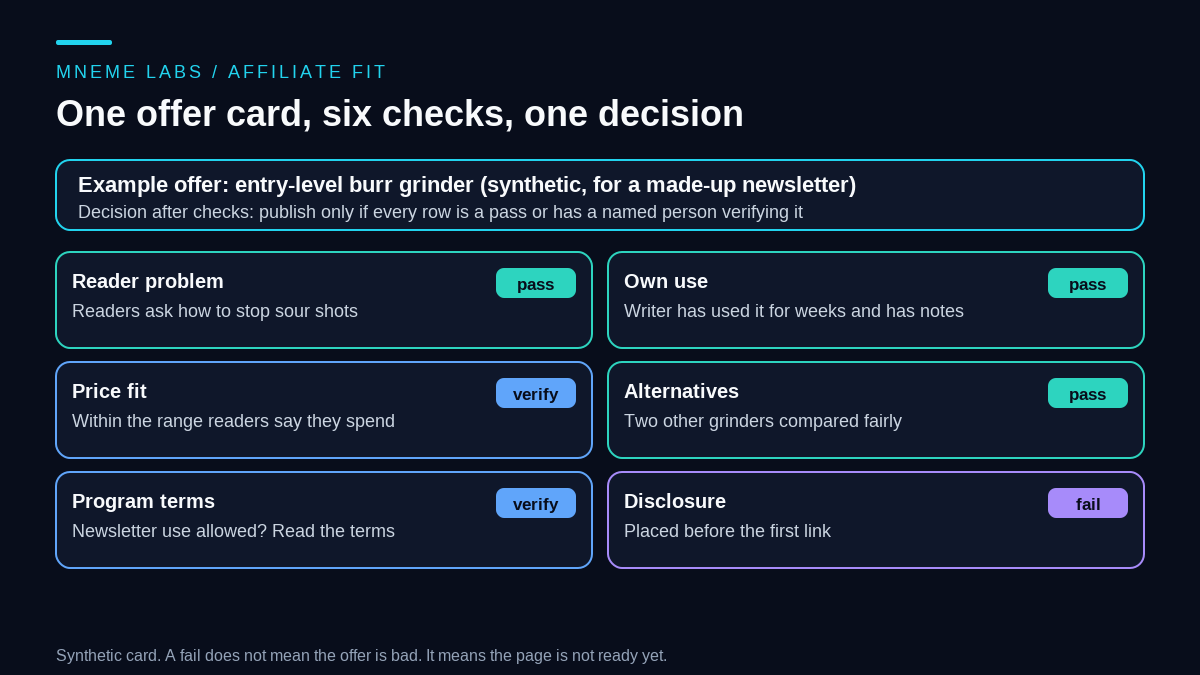
A workflow for choosing affiliate offers your audience actually needs, writing a plain disclosure, tagging links, and reading click and order counts as descriptive figures instead of proof. Includes a tested Python report on synthetic data.
In 2026, Instagram isn't just a photo grid; it's a high-velocity content engine where attention is the only currency that matters. If you aren't leveraging automation to outpace the noise, you're already dead in the water.

If you're still trying to manually script, film, and edit three videos a day while running a business, you're already behind. I ride BMX for a living, but my real grind is engineering the systems that let me dominate the algorithm without burning out.

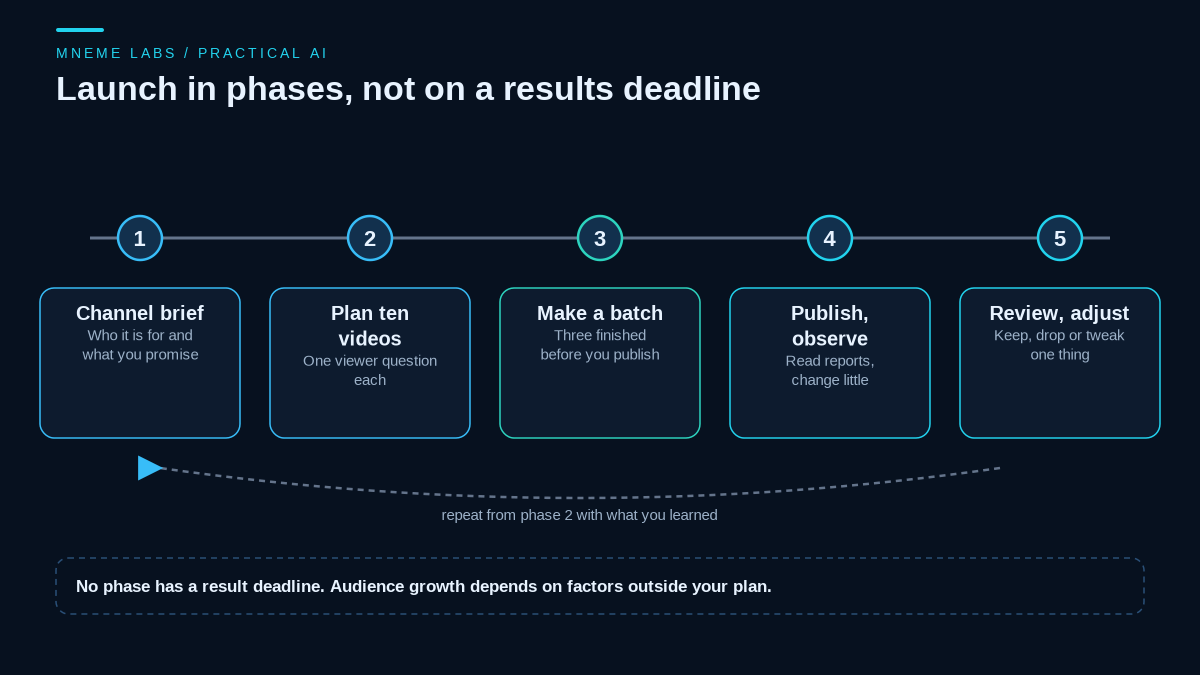
A phase-by-phase plan for launching a new YouTube channel: write the brief, plan ten videos with a checker, batch the work, package honestly, and run a review loop. AI is used for drafting and organizing. No timeline for results is promised.
Now, I measure them by the number of autonomous workflows running while I sleep. The transition from professional BMX rider to AI engineer wasn't a career pivot; it was a transfer of physics.

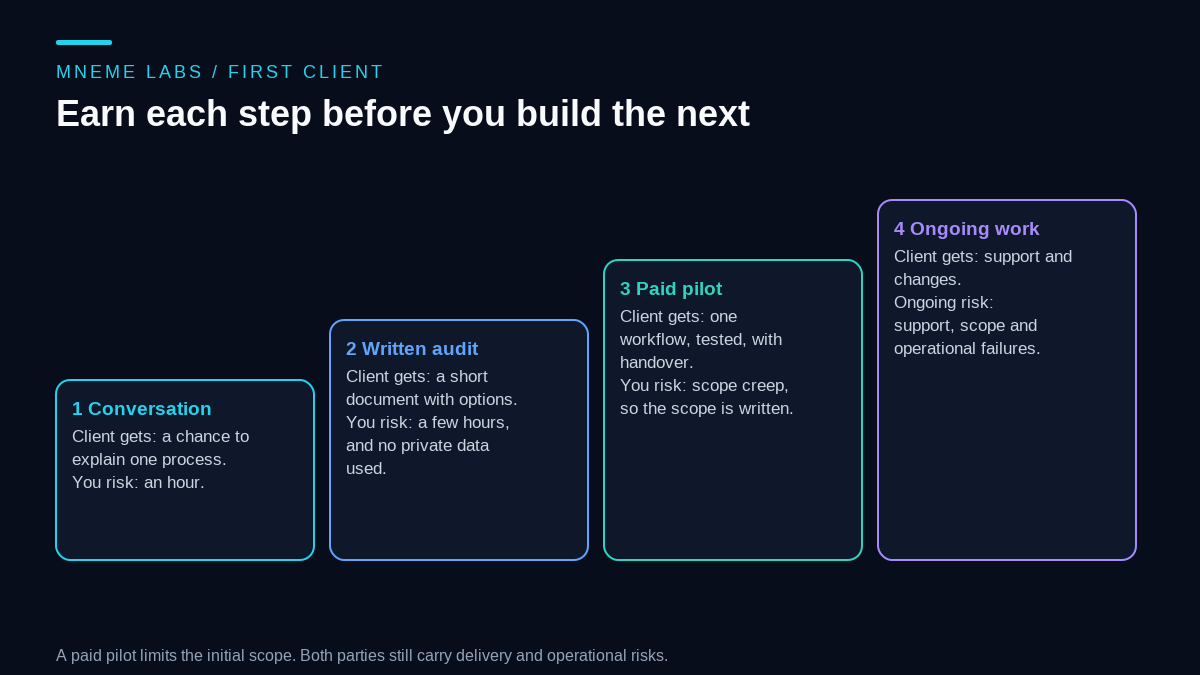
How to win a first client for AI automation work without giving away full builds: pick one narrow offer, show proof with a short audit, write a scope that flags gaps, and run a small paid pilot with a decision at the end. Includes a tested Python scope checker on synthetic data and notes on data handling, business structure and taxes.
In the BMX world, you don't get paid for trying; you get paid for landing the trick cleanly and getting out of the way so the camera can keep rolling. The same logic applies to selling AI automation services today.

If you stop pedaling, you fall. The same rule applies to running a business in 2024.

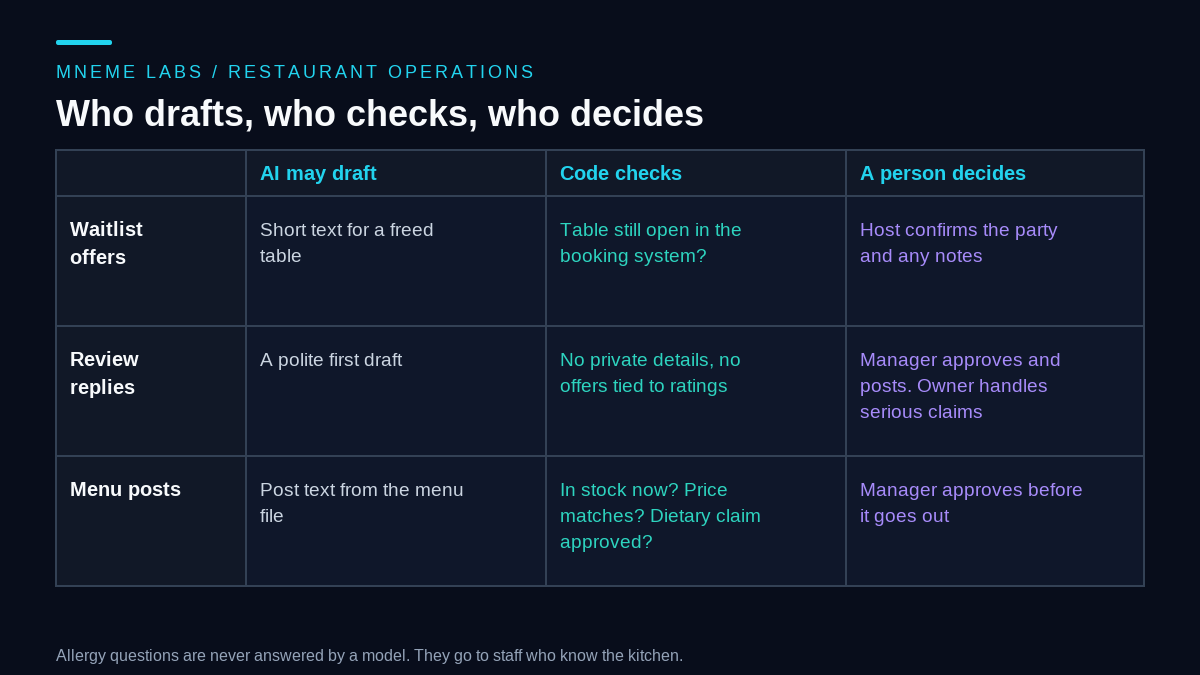
Three restaurant office workflows with clear checks: offering a freed table only after re-checking the booking system, drafting review replies for a manager to approve, and writing menu posts that cannot promote sold-out items, wrong prices or unapproved dietary claims. Includes a tested Python sketch on synthetic data.
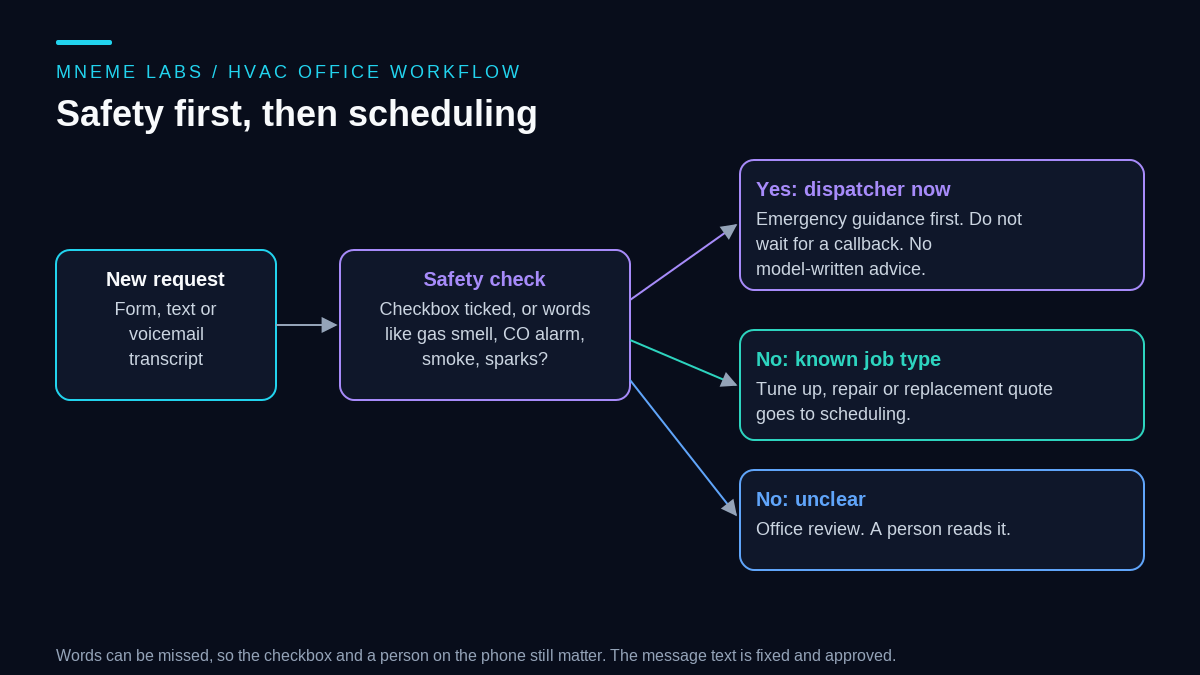
An office workflow for HVAC companies: sort incoming requests with safety questions first, offer appointment slots from fresh availability, and draft estimates from a dated price book that a person approves. Includes a tested Python sketch on synthetic data. No repair advice.
When you're riding, there's no room for hesitation. You hit the ramp, you commit, or you crash.

It sounds like a split personality, but the logic is identical: you find the friction points, you strip away the unnecessary weight, and you optimize for speed and precision. In BMX, that means shaving grams off the frame.

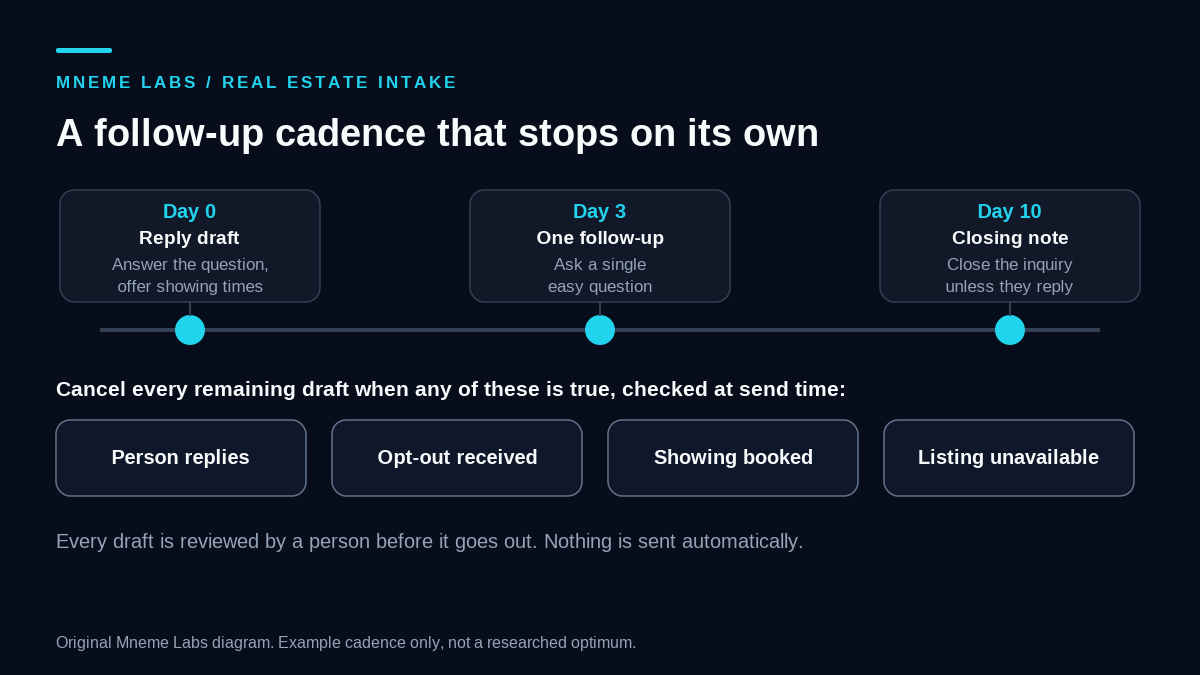
Set up a real estate inquiry workflow that records consent, drafts replies from listing facts, schedules follow-up drafts with stop rules, and keeps fair housing review in front of every message. No scraped leads and no invented results.
By day, I'm knee-deep in code building the backend for OpenClaw, helping three distinct brands scale without burning out their teams. By weekend, I'm ripping dirt tracks on my BMX bike, hunting for the perfect line and learning that if you don't commit to the jump, you crash.

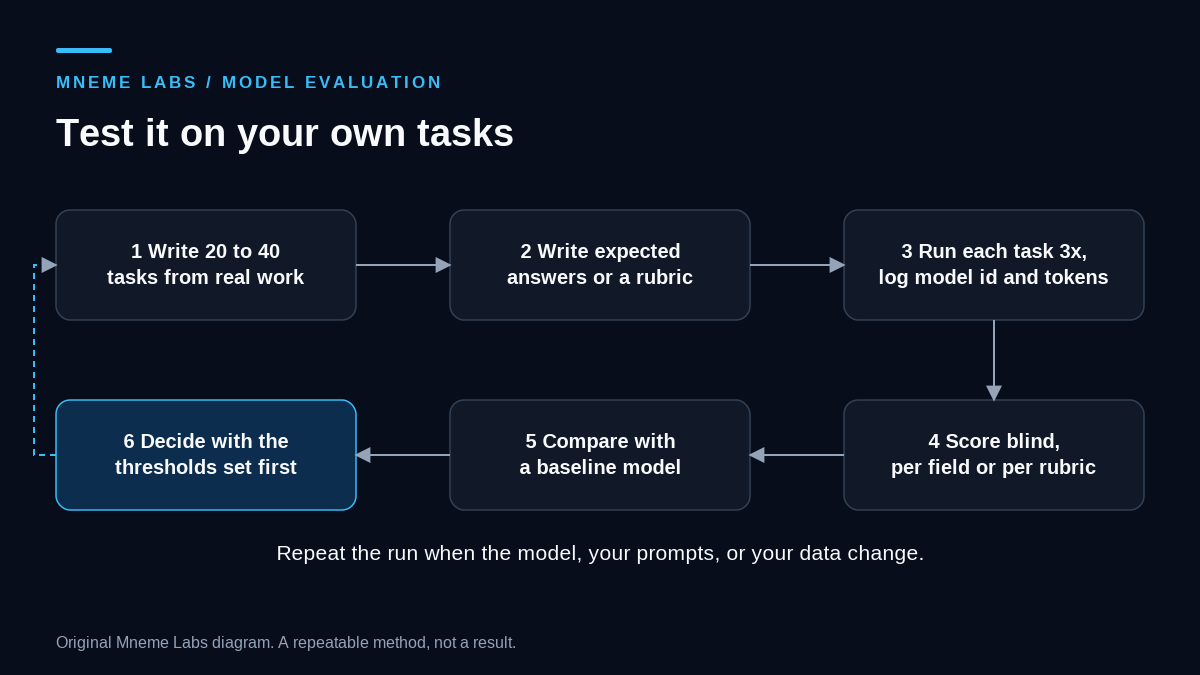
A sourced summary of the Gemini 3.1 Pro model identifier, status, limits, and supported features as Google documented them on 2026-11-15, plus a repeatable method for testing whether the model fits your own tasks.
The full content workflow — film, ingest, transcribe, extract clips, caption, thumbnail, and post — can run automatically with AI agents. Here's the complete pipeline architecture and code.

RIFE (Real-time Intermediate Flow Estimation) can double or quadruple the frame rate of any video using AI-generated intermediate frames. Full Python pipeline for 24fps → 60fps conversion.

Cursor, Kiro, and VS Code Copilot each take a different approach to AI-assisted coding. Here's a technical breakdown of the differences — plus how to control any of them programmatically via Chrome DevTools Protocol.

A real comparison of AI upscaling (Real-ESRGAN, SwinIR) vs classical methods (Lanczos, Bicubic) with PSNR/SSIM benchmarks, code examples, and guidance on when to use each.

Build a Python auto-cut pipeline: YOLO26 scores the action, Whisper adds word-level captions, ffmpeg exports clips. Model sizing, tuning, and fixes.

Build real-time hand tracking with 21-landmark detection and SLAM-based environment mapping using MediaPipe and Open3D. Complete Python implementation for AR/VR spatial interactions.
Build an affiliate blog with AI that survives review: research real demand, write from evidence, disclose properly, tag links, and avoid Google's spam traps.

Generate complete game level layouts, tile maps, and environment scripts using local LLMs and procedural algorithms. Export directly to Godot, Unity, or Unreal. Zero API costs.

Generate complete landing page wireframes, logo concepts, and UI mockups from text descriptions using AI. Export to Figma JSON, React components, or static HTML — no Photoshop required.

Playwright gives you programmatic browser control over any social media platform — even ones without public APIs. Here's how to build a multi-account posting system that handles Instagram, TikTok, Facebook, and YouTube from a single Python script.

MusicGen from Meta generates original music from text descriptions — 'lo-fi hip hop 120bpm with rain sounds' becomes an actual audio file. Full setup guide, model comparison, and Python integration code.

# How to Build a YouTube Shorts Pipeline With AI I don't have time to edit videos. My hands are dirty from tuning bike bearings, or I'm out on the track trying to land a new trick for my next spon...

OpenAI's Whisper model runs entirely locally — no API key, no per-minute fees. This guide covers every model size, GPU acceleration, accuracy tips, and how to integrate it into a video processing pipeline.

Extract vocals, drums, bass, and instruments from any song in minutes using Meta's Demucs model. Complete Python walkthrough with real code, GPU tips, and quality benchmarks.

Manual lead research takes hours. AI-assisted scraping and enrichment can generate 300+ qualified leads per month with minimal human time. Full pipeline: target identification → scraping → enrichment → CRM export.

OpenClaw Skills are modular instruction packages that give your AI agent new capabilities — from camera control to email automation to social posting. Learn how the skill system works and how to install from ClawHub.

The omni_physics_simulation module brings compiled C++ physics to your AI game pipeline — rigid body dynamics, constraint solvers, and GPU-accelerated particle systems accessible from Python via pybind11.

Generate 3D meshes from text prompts entirely on your local GPU using OpenAI's Shap-E model. Export to OBJ, GLB, STL — no API key or internet connection required.

Generate clean SVG vector graphics from text prompts using diffusion models + vectorization pipelines. No Illustrator, no manual tracing — fully programmable vector output.

Hands-on comparison of OpenAI TTS, ElevenLabs, Coqui AI (local), Google Cloud TTS, and Azure Cognitive Services. Latency, quality, cost, and Python code for each.

An AI workspace centralizes every AI capability you use — video editing, music generation, code IDE, image tools — into a single cohesive environment. Here's why standalone tools aren't cutting it anymore.

# How to Use AI to Convert Blog Posts Into Pinterest Pins I spend my mornings grinding on dirt jumps and my afternoons debugging Python scripts. My life is split between the physical impact of lan...

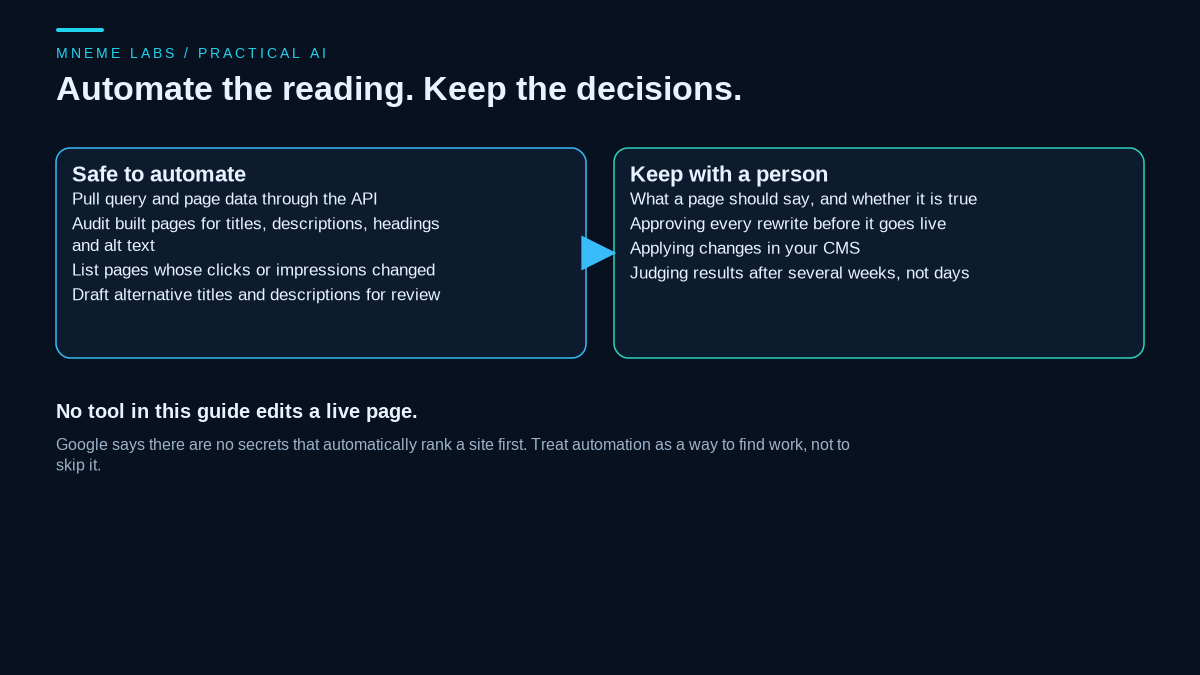
Automate the reading side of SEO, such as audits and Search Console data pulls, and keep rewrites, publishing and judgment with a person. Includes a tested on-page audit script, API quota facts, and an honest approach to measuring changes.
Send hyper-personalized emails to thousands of subscribers without writing each one manually. AI agents make true 1-to-1 email marketing possible.

# How to Build a Content Pipeline That Runs Without You I spend my mornings hitting the dirt at the local skatepark and my afternoons debugging Python scripts. To most people, these two worlds don...

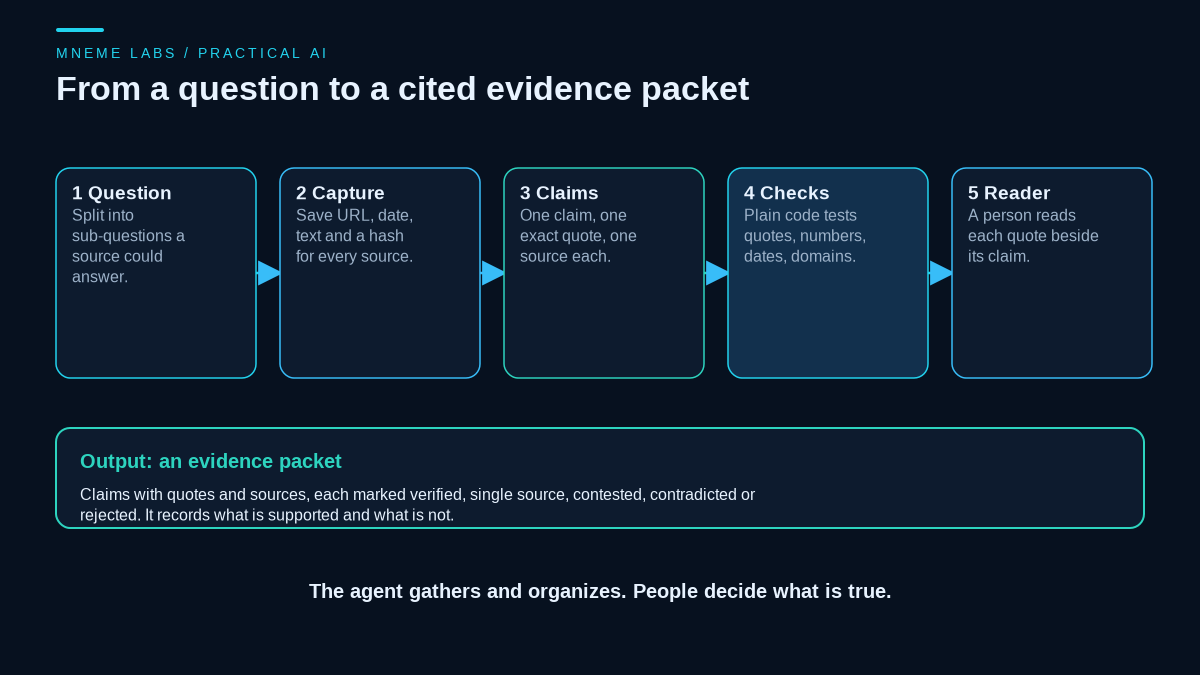
A research agent is most useful when it returns claims, exact quotes and sources that a person can check, and least useful when it returns a confident summary. This guide builds the checks around an evidence packet and shows what they cannot catch.
Stop drowning in support tickets. AI agents can resolve 80% of customer questions instantly while escalating complex issues to humans automatically.

Personalize cold email with AI the defensible way: legal basics, Gmail sender rules, evidence-backed research notes, validated drafts, human review, and follow-up limits.

Stop frantically scribbling notes and missing what people say. Let AI capture, summarize, and extract action items from every meeting automatically.

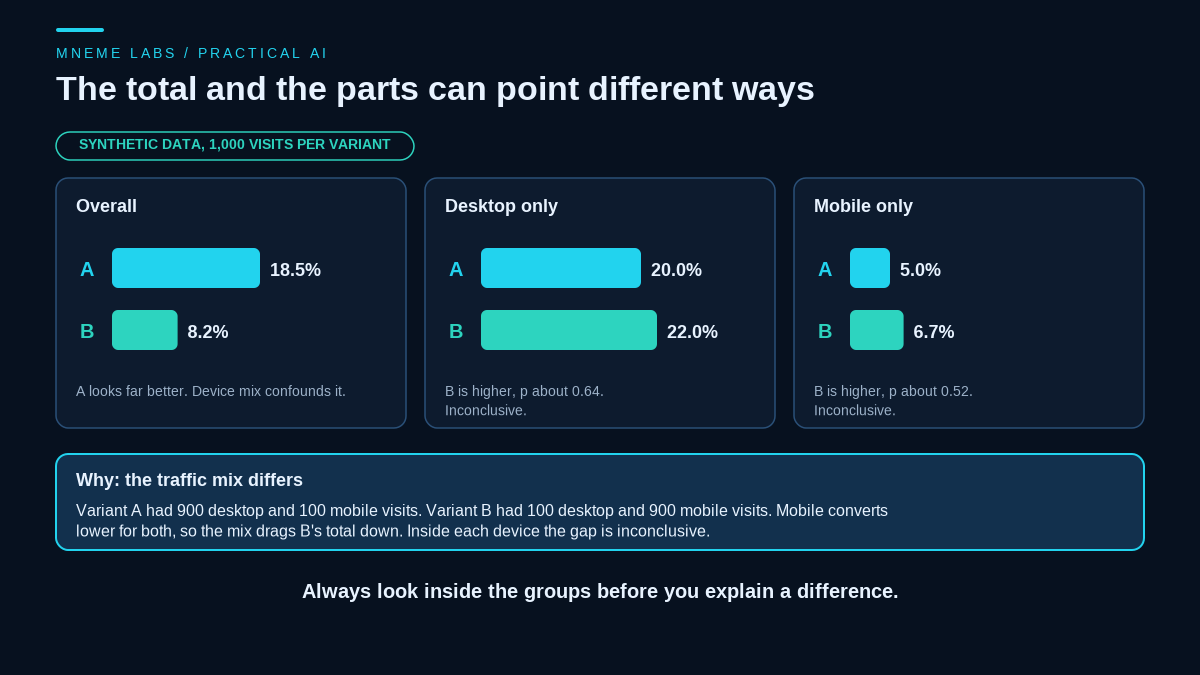
An assistant can write a fluent explanation of any table, including a wrong one. This guide puts the calculations first: validate the data, compute rates with their denominators, check the groups inside the total, test with the sample size in mind, and only then write.
Stop wasting time on repetitive tasks. These 10 automations will save you 15+ hours per week and can be set up in a single afternoon.

Manual A/B testing took weeks per test. AI testing system now runs 20+ tests simultaneously—finding winners in days instead of months.

Running one AI agent is useful. Running seven coordinated agents is transformative. Here's how to orchestrate multiple AI agents that work together seamlessly.

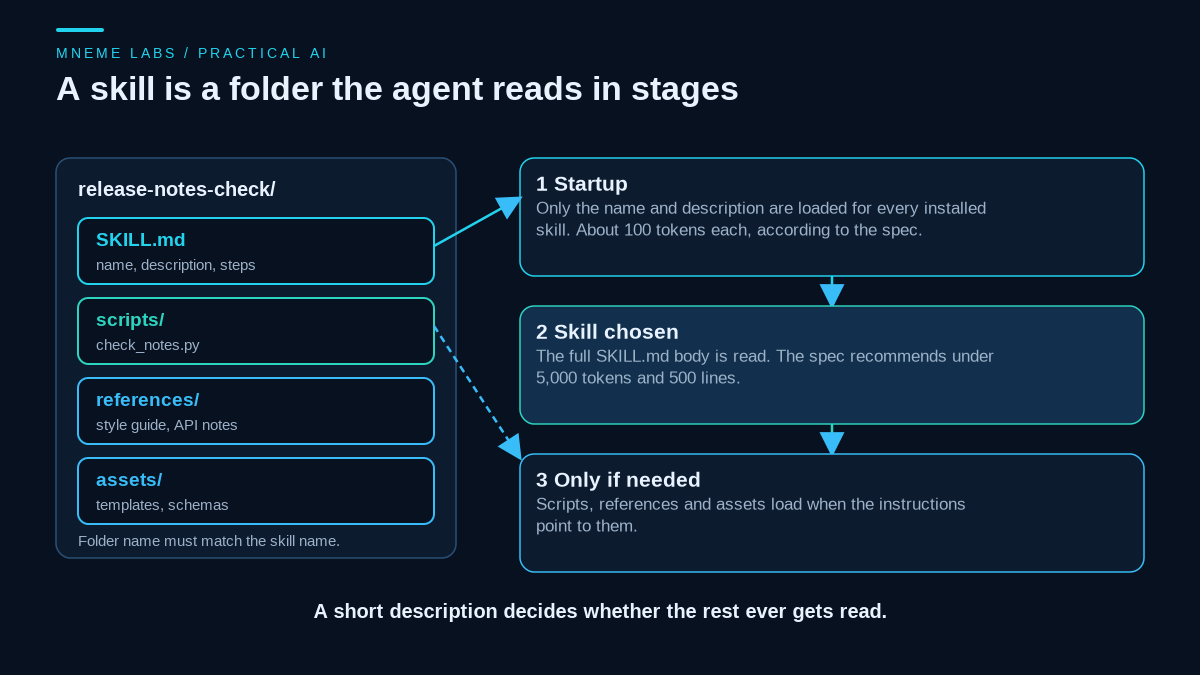
An agent skill is a folder of written procedure that an agent reads when a task matches. This guide shows the SKILL.md format, builds a small release notes skill with a bundled check script, and covers where skills fail.
Everything you need to know about AI agents as a content creator, from basic concepts to your first automation. No tech background required.

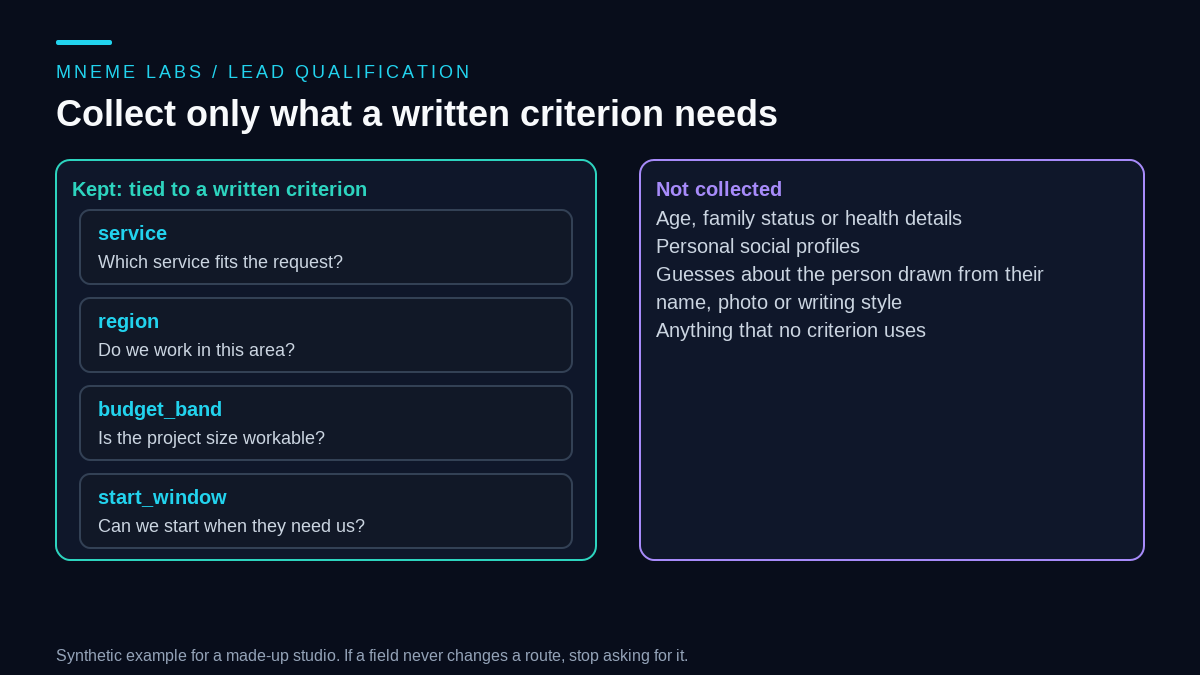
A practical way to qualify inbound leads with explicit business criteria, a model that only fills in fields, plain code that routes, and a weekly human review. Includes a tested Python router and notes on data minimisation, automated decisions and follow-up email rules.
My AI agent creates 15 Pinterest pins daily from my blog content and posts them automatically. Zero manual design. 47K monthly Pinterest visitors.

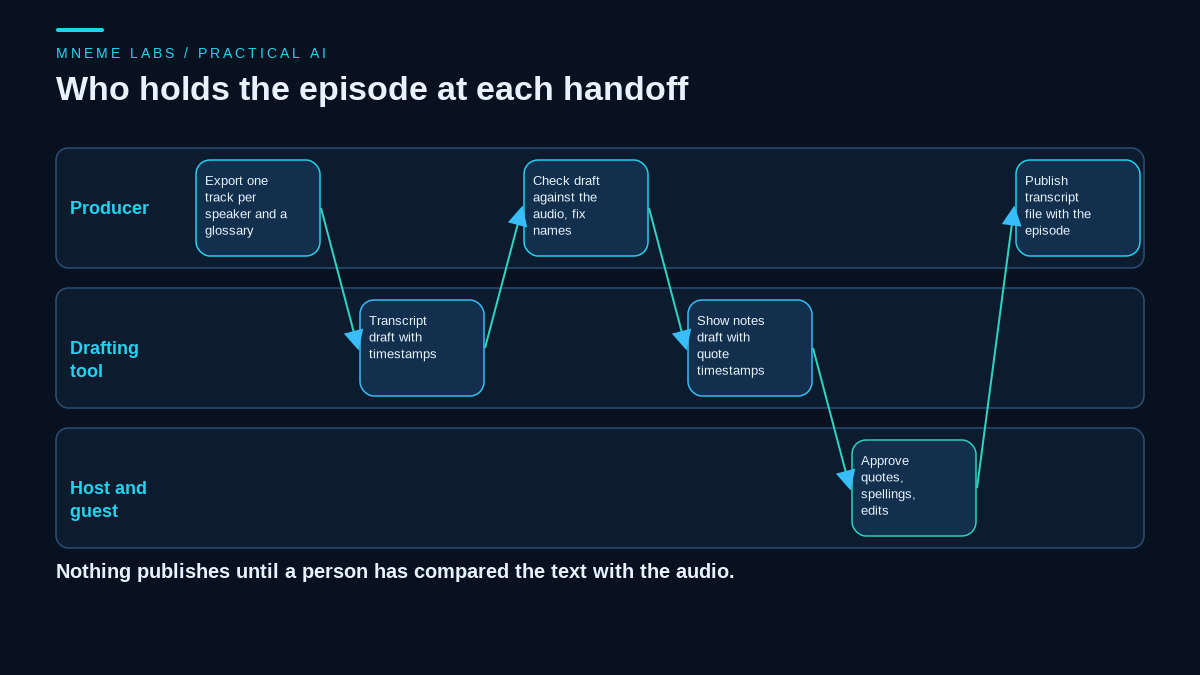
A concrete audio handoff for a podcast episode: per-speaker tracks, a glossary, a reviewed transcript with speaker names, quote-backed show notes, and a consent gate for any synthetic voice work.
I shoot for 20 minutes. My AI agents handle the rest: editing, subtitles, thumbnails, titles, descriptions, chapters, and publishing. Here's the complete system.

Drowning in analytics data across 8 platforms. Built an AI dashboard that tracks everything automatically—now seeing patterns I missed in 5 minutes vs 3 hours.

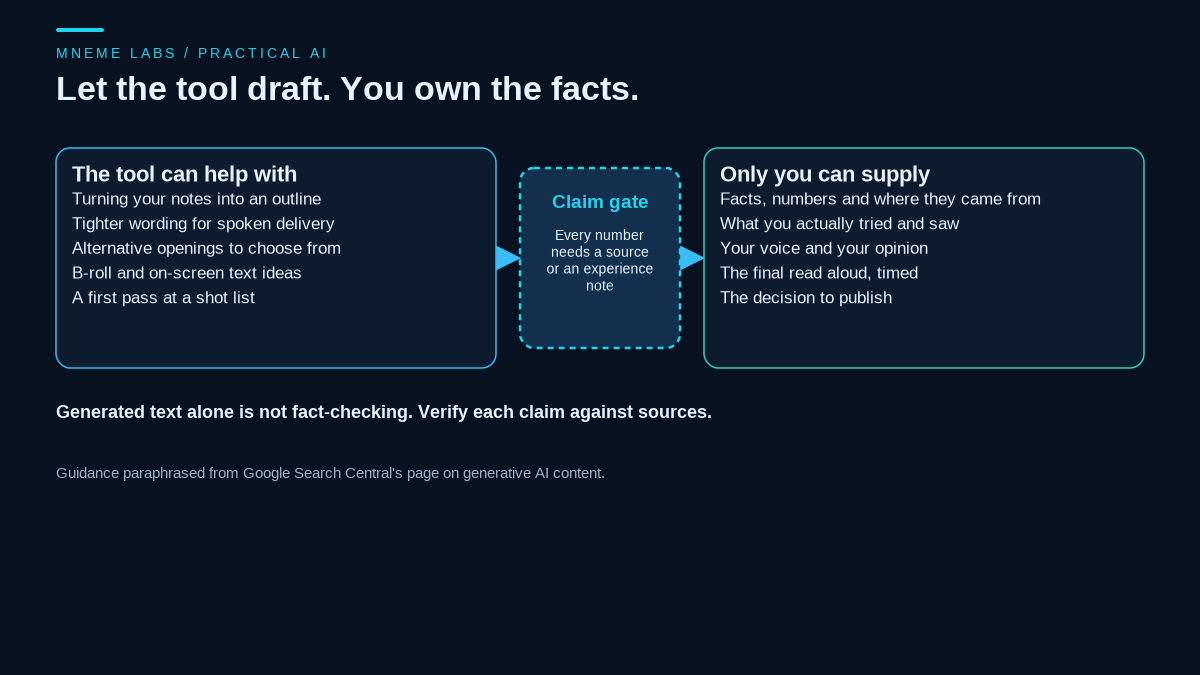
How to use an AI writing tool for outlines, tighter spoken lines, and B-roll ideas without handing it your facts. Includes a tested script linter for hook length, spoken pace, and unsourced claims, plus the YouTube disclosure and retention basics.
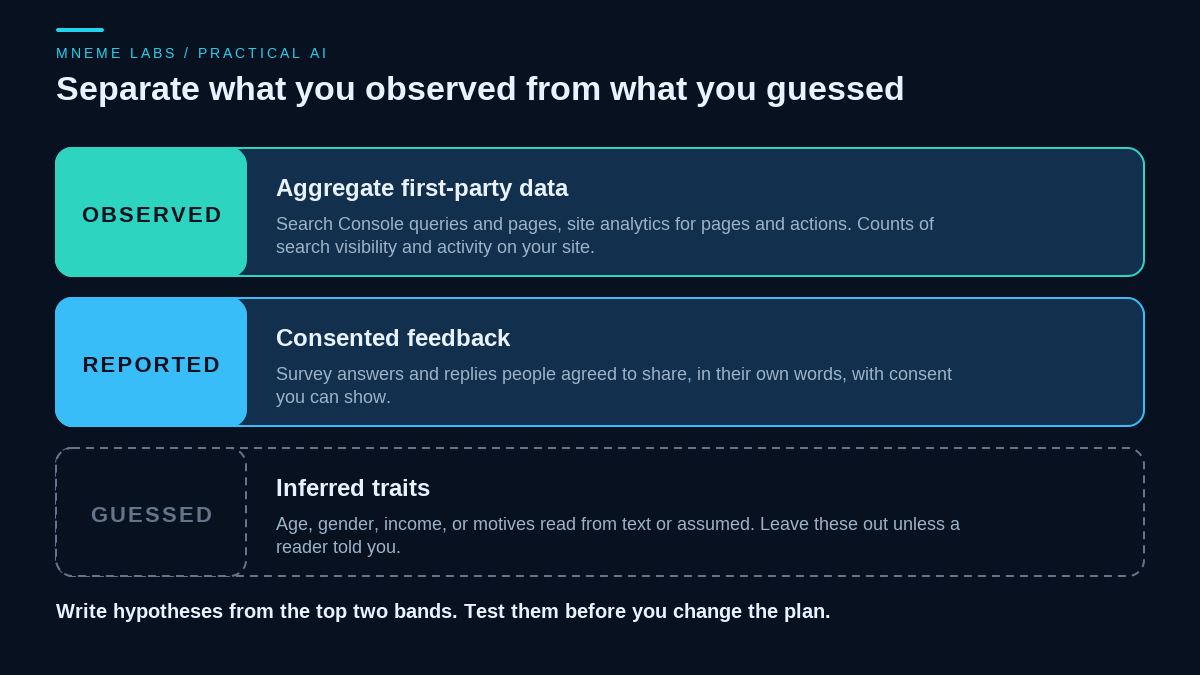
Use aggregate search and analytics data plus feedback readers agreed to share to form testable content hypotheses, without guessing demographics or inventing personas.
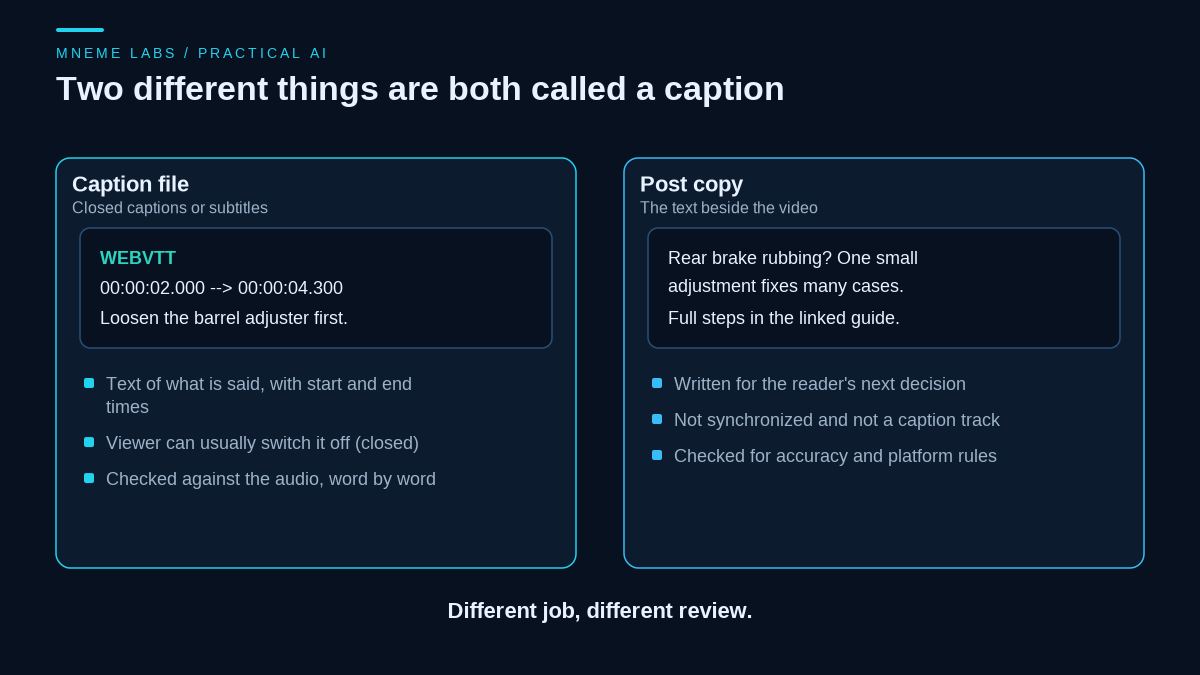
How to turn a speech-to-text draft into captions people can actually read: cue timing, line length, speaker names, review steps, and why a caption file is not the same as post copy.
Stop worrying about bugs slipping into production. AI agents can review code, identify issues, suggest improvements, and enforce standards automatically.

Manual competitor tracking took 4-6 hours weekly. AI analysis system now monitors 10 competitors automatically—complete competitive intelligence in 20 minutes.

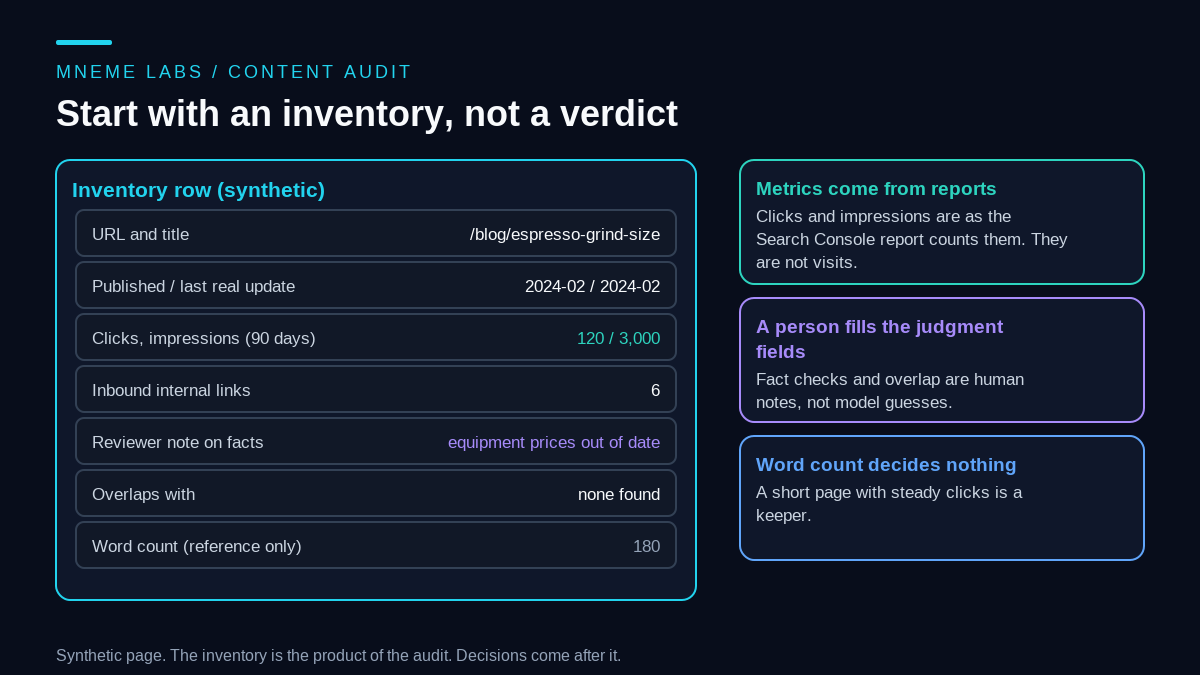
A content audit starts with an inventory of existing pages, adds performance data from a search report, and produces suggestions for a person to review. This guide includes a tested Python triage sketch that ignores word count, and covers merging with permanent redirects, rewriting titles, and why you should not delete or hide pages on shallow rules.
Adapt one post for 10 platforms with AI: verified character limits, a validated adaptation script, UTM-tagged links, scheduling options, and API caps.

Plan 90 days of content with AI: set pillars and cadence, generate ideas as validated JSON, schedule by rule, and export a CSV Google Calendar imports.

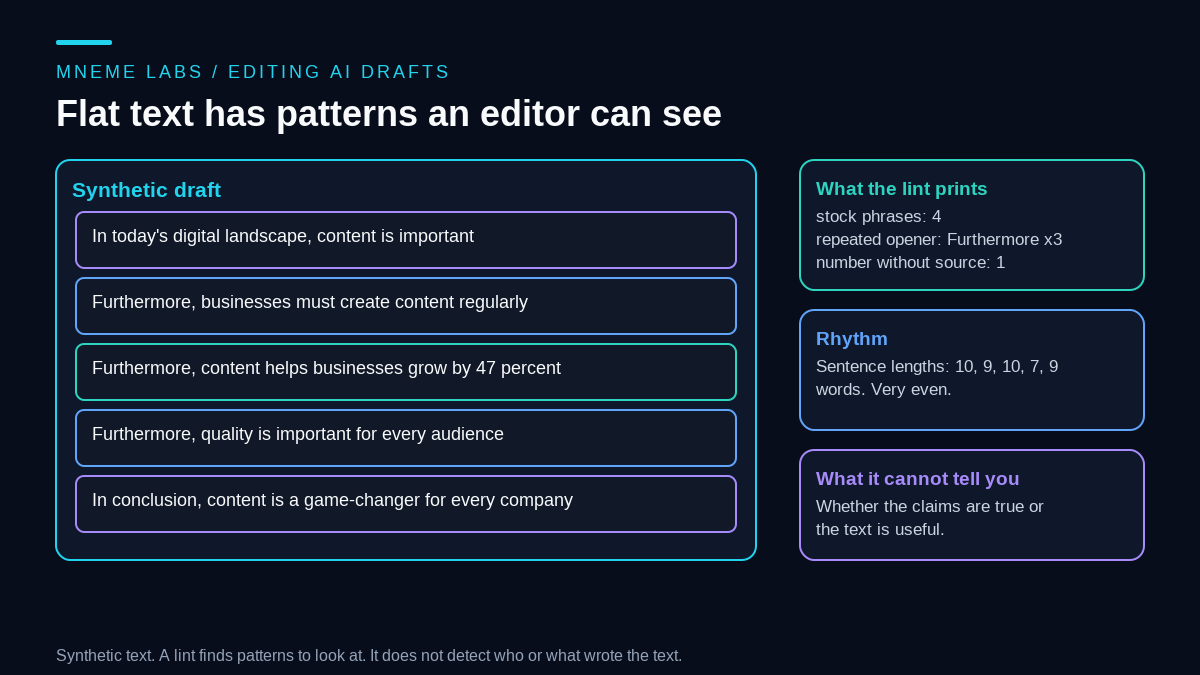
A draft sounds robotic when it is generic and unsupported. This guide gives an editing order that puts evidence and specific examples first, shows a small tested Python lint for stock phrases, repeated openers, even rhythm, unsourced numbers and experience claims, and explains why a lint cannot judge quality or authorship.
Generic templates felt robotic and forced. Built AI-powered templates that learn my style—now creating on-brand content 5× faster with zero generic feel.

Managing content workflow manually took 8-12 hours weekly. AI workflow system now automates the entire pipeline—from idea to publish in 90 minutes.

Here's what I'm betting on for the next 12 months in AI content creation. Some of these predictions will make me look stupid. Others will make you rich if you act early.

Writing email sequences took days. AI sequence generator now creates 7-14 day nurture sequences in 20 minutes—converting 3× better than my manual emails.

My AI research system generates 500+ validated content ideas monthly and identifies trending topics 2-3 weeks before they explode. Never stare at a blank page again.

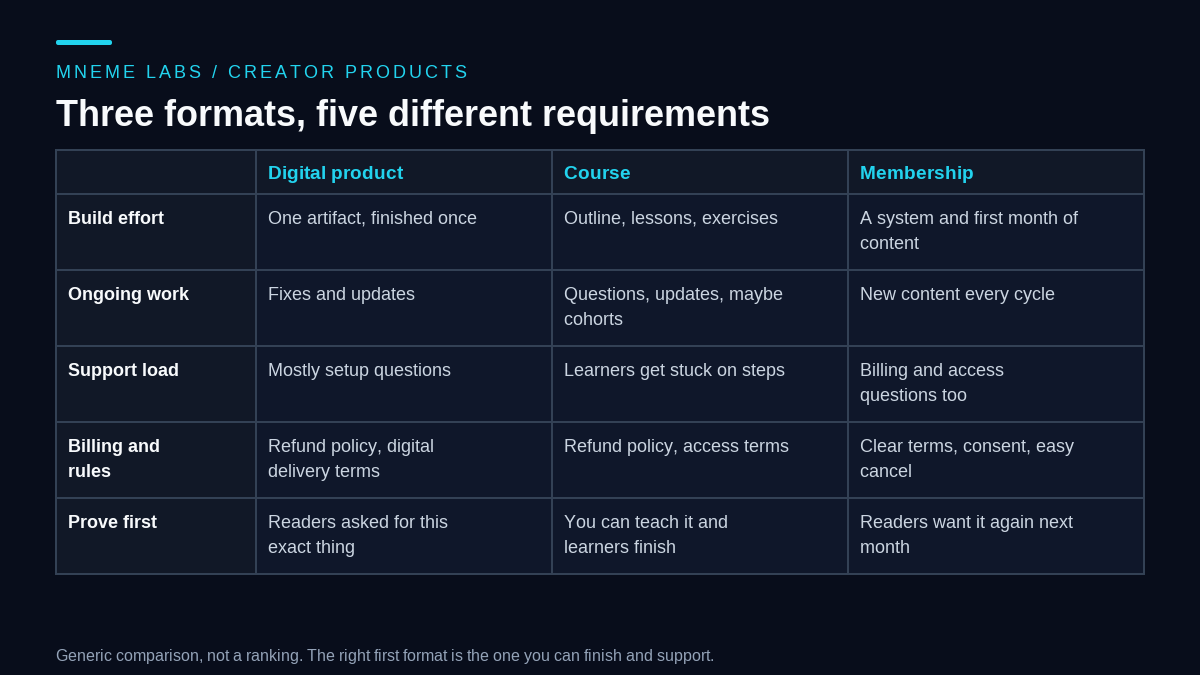
A comparison of what a digital product, a course and a membership each require, with a validate-first path, a small break-even calculator tested on synthetic numbers, and notes on refunds, cancellation and recurring billing rules.
I went from spending 4 hours per newsletter to 15 minutes using AI automation. Here's my complete system for writing, scheduling, and sending newsletters that get 40%+ open rates.

I used to spend 15 minutes per Instagram caption. Now I batch-write all 21 captions for the week in under an hour using AI. Here's my complete system for scroll-stopping captions that get engagement.

Writing comprehensive 5,000+ word guides took me 3-4 days. Now AI helps me create deeply researched, well-structured long-form posts in 45 minutes that rank #1 on Google.

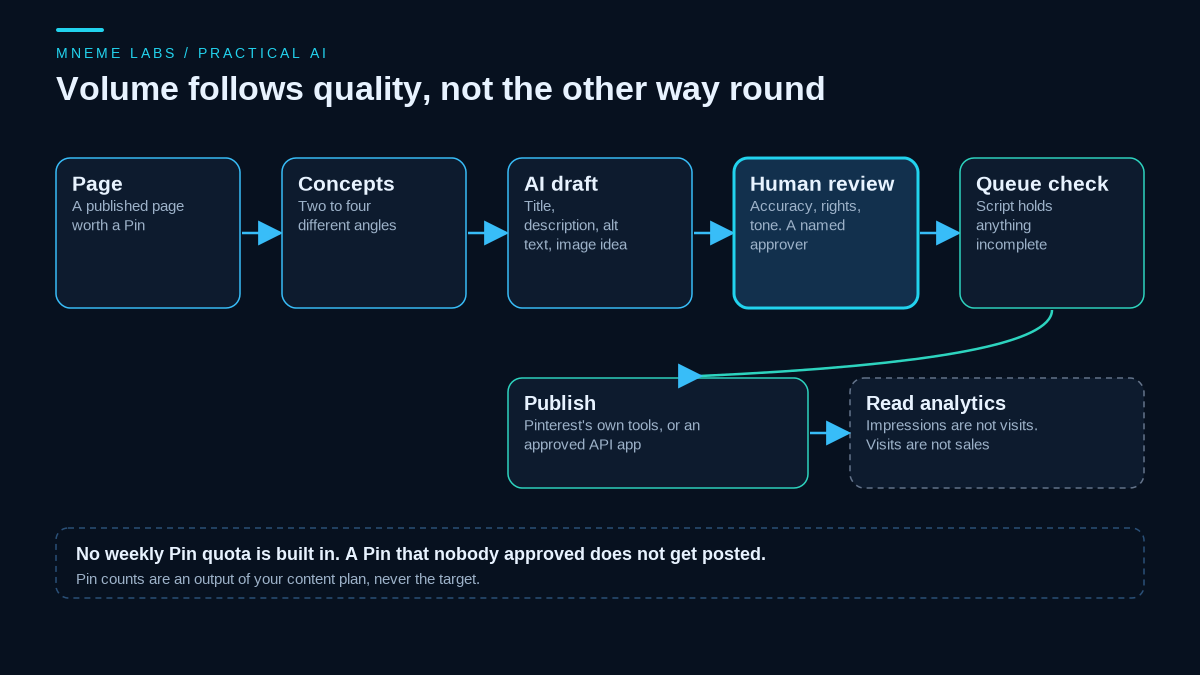
Turn pages you have already published into distinct Pins with AI help, require a named human approver, check the queue with a script, and publish within Pinterest's rules and API limits. Includes tested code. No volume target and no traffic promise.
I spent 2-3 hours writing show notes per episode. Now AI generates complete show notes, timestamps, quotes, and SEO summaries in 8 minutes automatically.

I spent hours creating SEO briefs manually. Now AI generates comprehensive, data-driven content briefs in 8 minutes—complete with keyword clusters, competitor analysis, and optimization guidelines.

My AI system helps me create 30 short-form videos per week across TikTok, Reels, and Shorts. Here's the complete strategy for ideation, scripting, editing, and posting.

Writing Twitter threads took 2-3 hours. AI thread generator now creates viral-worthy threads in 10 minutes—using proven formulas that get thousands of impressions.

My AI system creates 90 tweets and 12 threads per week, scheduled automatically. Here's how I grew from 2,400 to 34,000 followers in 7 months using AI.

I generate 50+ custom images per week for my content in minutes, not hours. Here's the complete guide to AI image generation for blog posts, social media, thumbnails, and more.

Building landing pages took 4-6 hours. AI landing page generator now creates fully optimized pages in 15 minutes—converting 2× better than manual pages.

Manual SEO took 4-5 hours per post. AI SEO automation now handles keyword research, content optimization, and tracking—ranking for 100+ keywords automatically.

Scheduling posts daily took 30-45 minutes. AI scheduling system now schedules 90 days of content in 2 hours—with perfect timing optimization.

Writing was slow and I always second-guessed myself. Built an AI writing assistant that helps in real-time—now writing 3× faster with better quality.

I built an AI sub-agent that researches, outlines, writes, and optimizes blog posts completely autonomously. Here's how to build your own blog writing agent from scratch.

I had 15 different tools and workflows. Now one AI-powered system handles everything—blog, video, social, email, podcast—all from a single content piece.

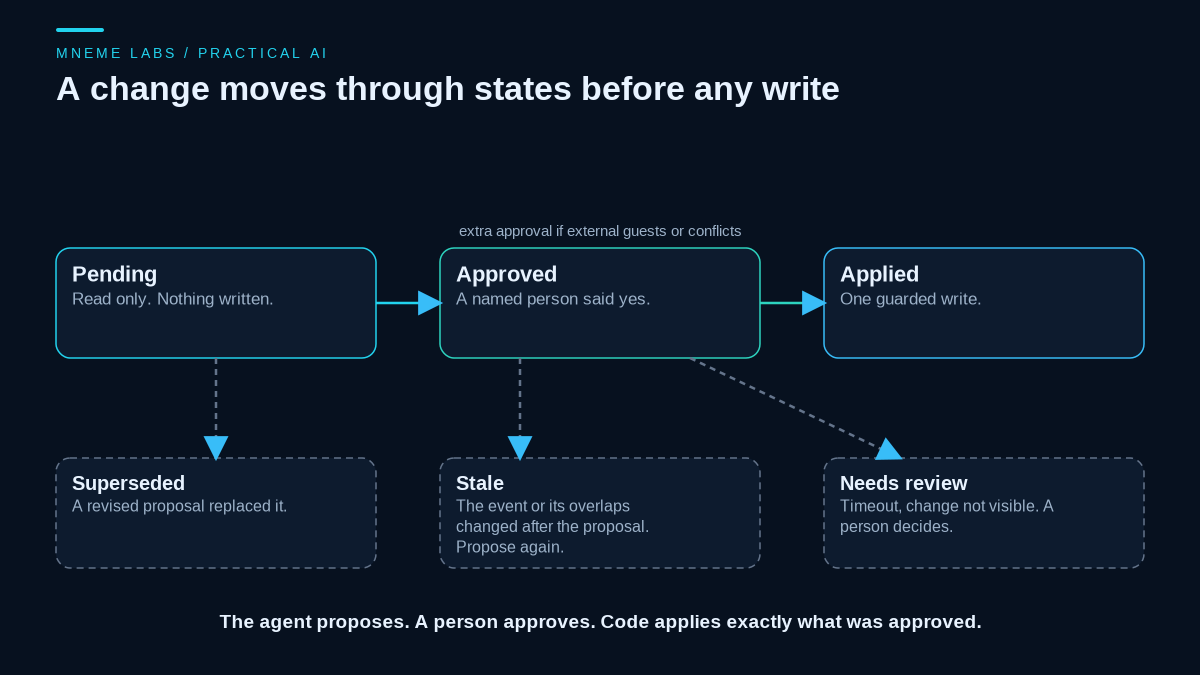
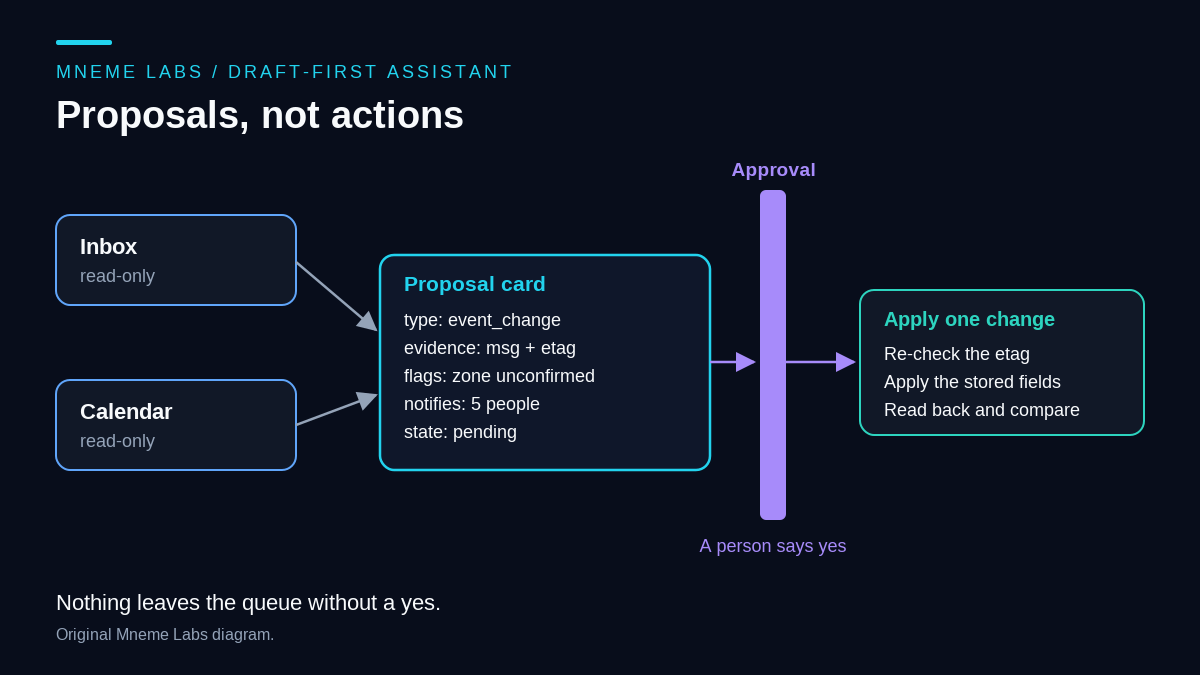
A calendar write can notify other people and cannot be taken back quietly. This guide builds the apply step of a calendar agent: versioned proposals, a separate approval for outside guests, a version check on the write, and safe handling of timeouts.
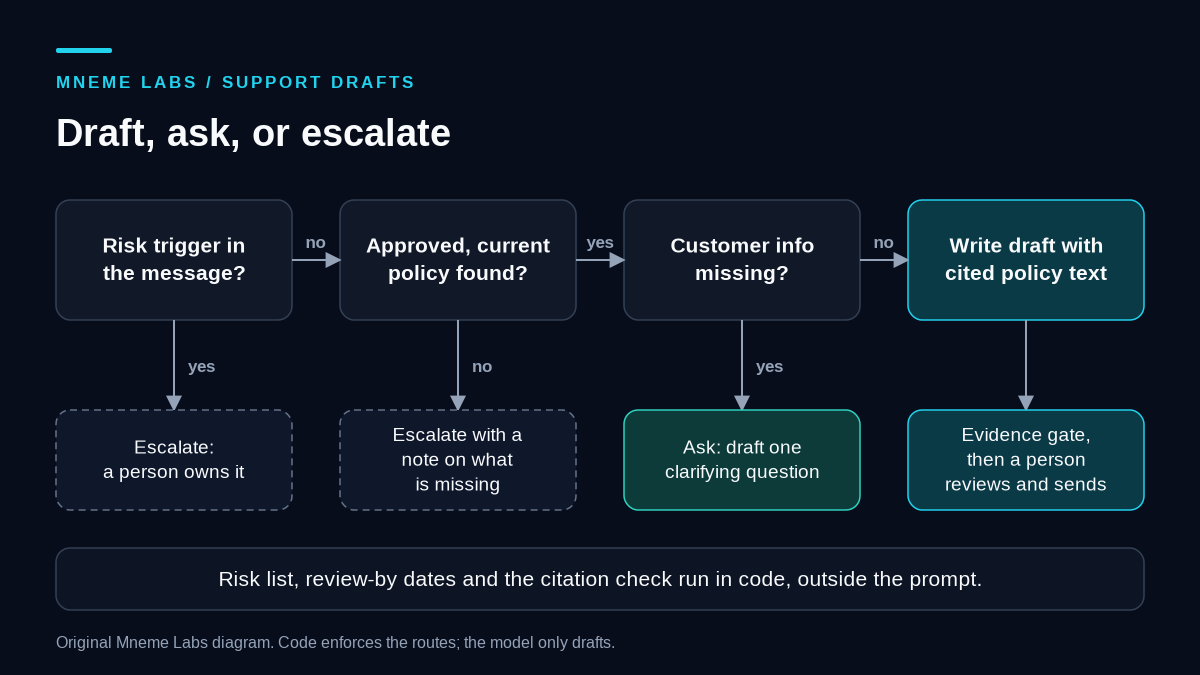
Design a support drafting workflow that retrieves approved policy text, refuses to answer without evidence, escalates risky cases, and leaves sending to a person. Includes a policy record, an evidence gate in Python, and six acceptance cases.
Run a content batch day with AI: size the batch to your real capacity, prep the inputs, work in blocks, apply quality gates, and follow AI-disclosure rules.

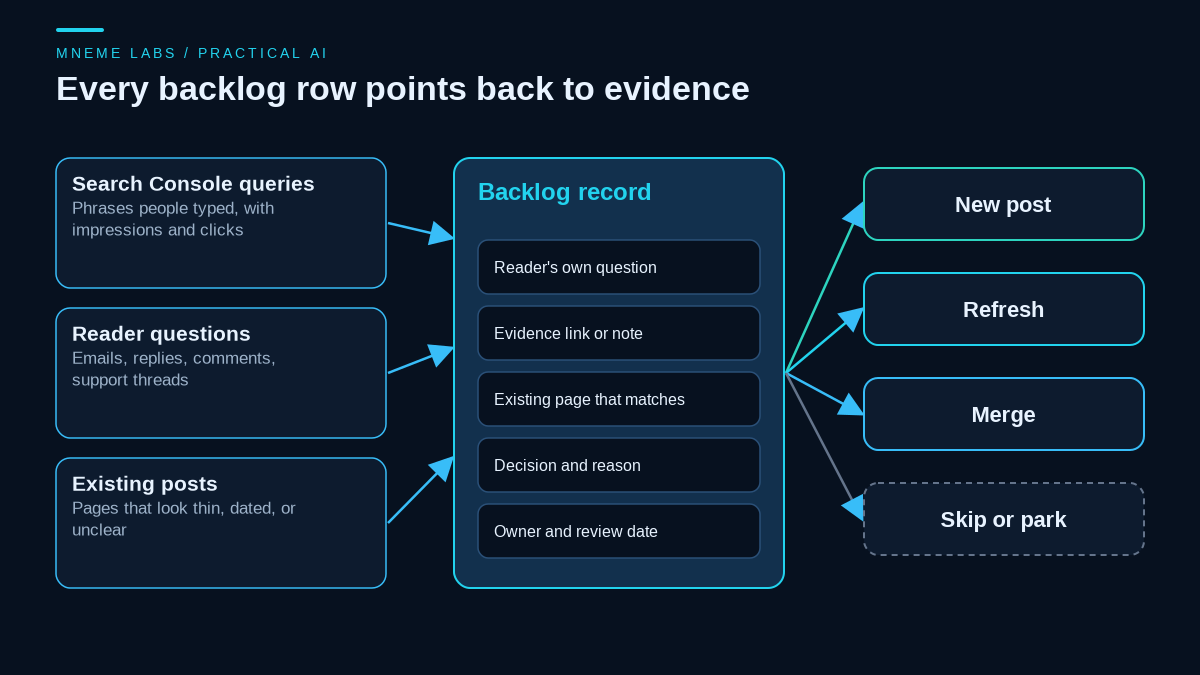
A sustainable idea backlog is a maintained list with evidence, a decision per row, and a review habit. Learn what each row should hold, how to deduplicate, and when to refresh instead of publish.

One-size-fits-all content was underperforming. Built AI personalization that adapts content to each visitor—conversions jumped from 3% to 11%.

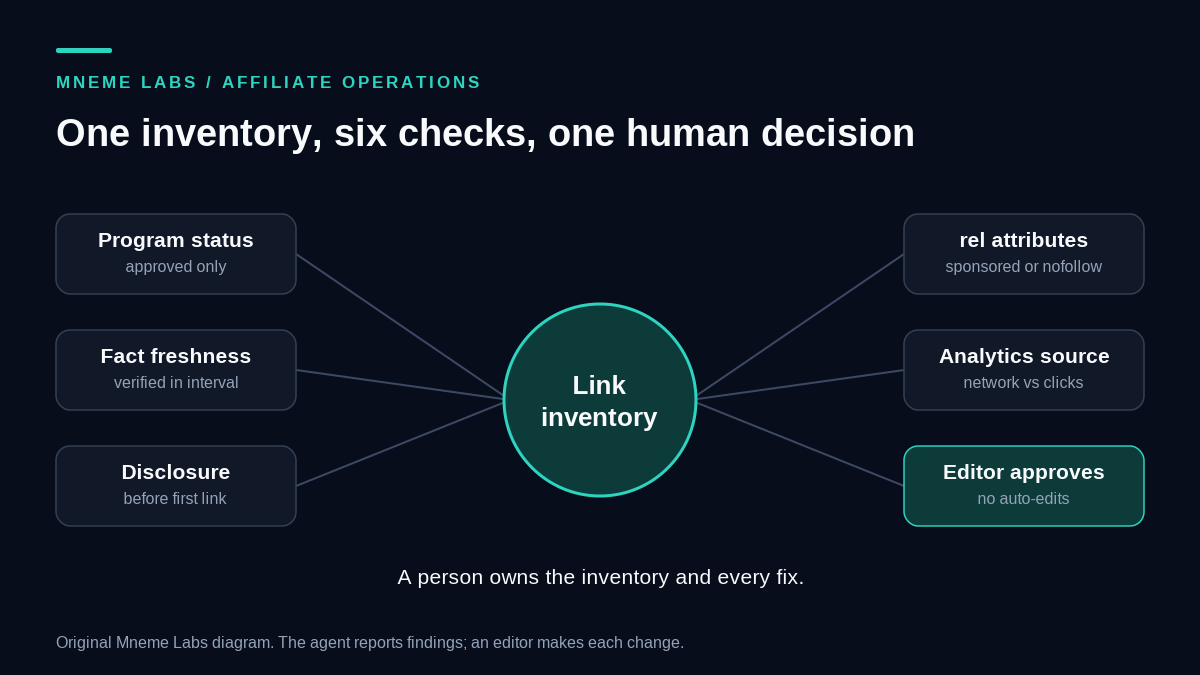
A practical look at what an AI agent can safely do in affiliate operations: audit links against an approved inventory, flag stale facts and missing disclosures, and report analytics honestly, while people keep control of approvals, edits, and rankings.
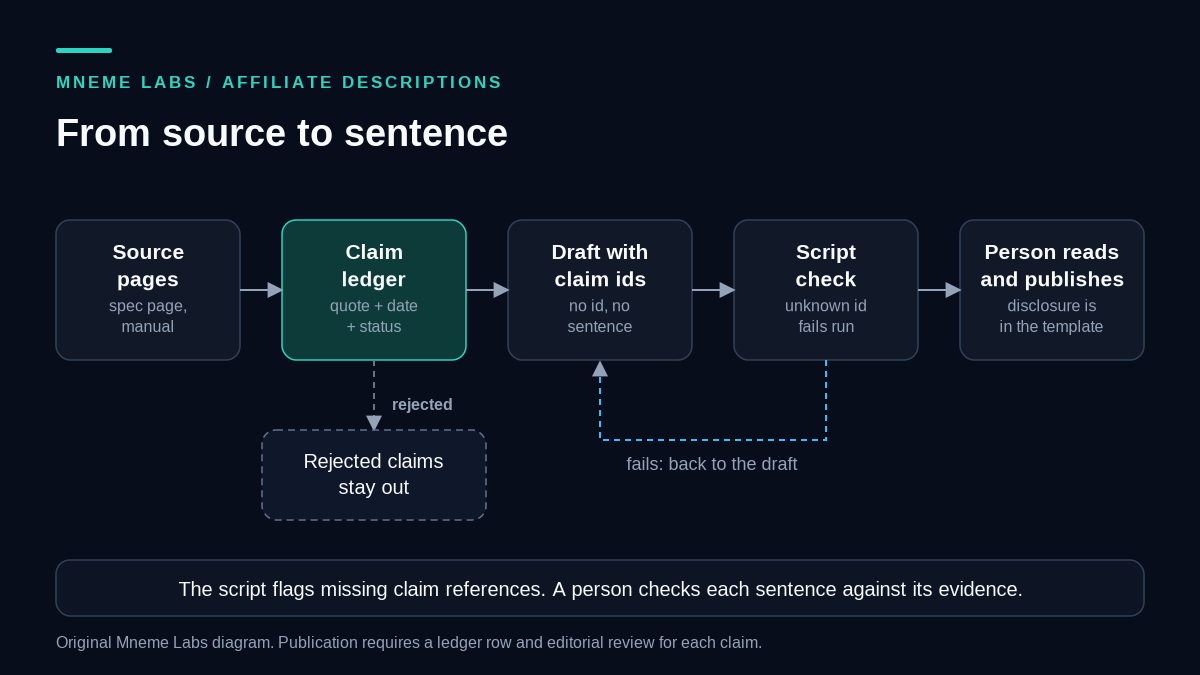
A claim ledger keeps AI-written product descriptions tied to checked facts. Learn how to record sources, handle compatibility claims, block invented reviews, place disclosures, and validate drafts with a short Python script.
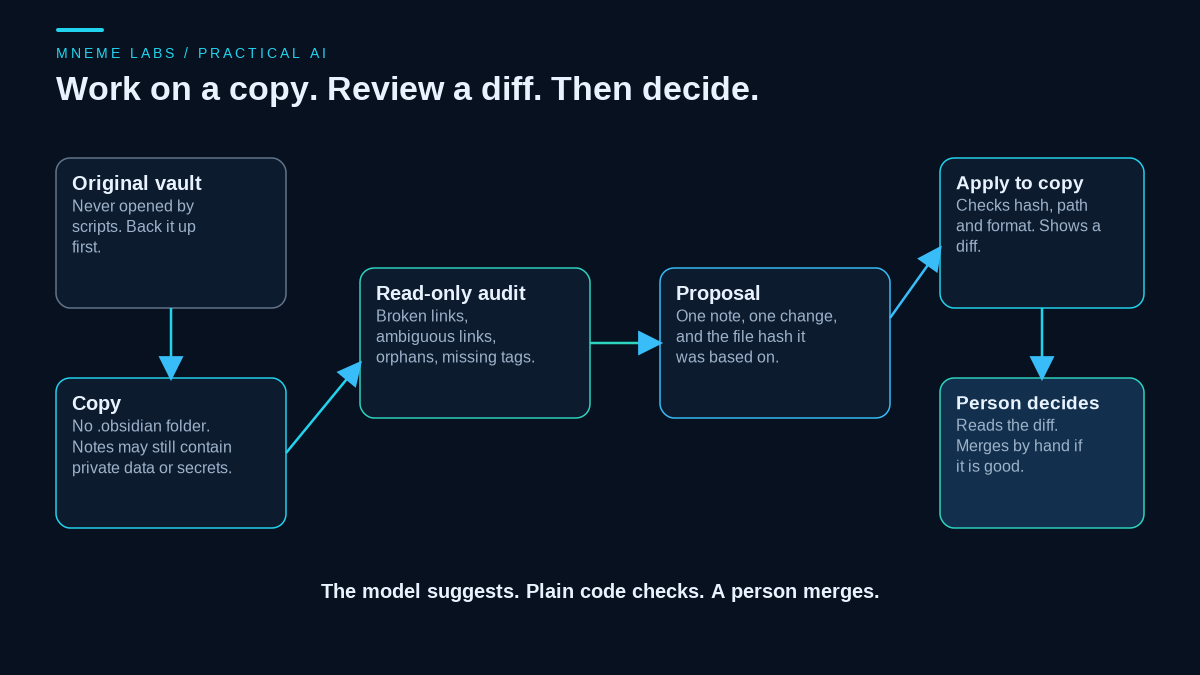
An Obsidian vault is a folder of Markdown files, which makes it easy to script and easy to damage. This guide works on a synthetic copy: a read-only audit, one-note proposals checked by file hash, and a diff a person reads before merging.
I was spending $200+/month on OpenAI API costs. Now I run AI models locally for $0/month. Here's how to set up local AI models that match cloud quality without the subscription fees.

Step-by-step guide to building an AI agent that researches, writes, optimizes, and publishes blog posts autonomously. My agent publishes 3 posts/week with zero manual work.

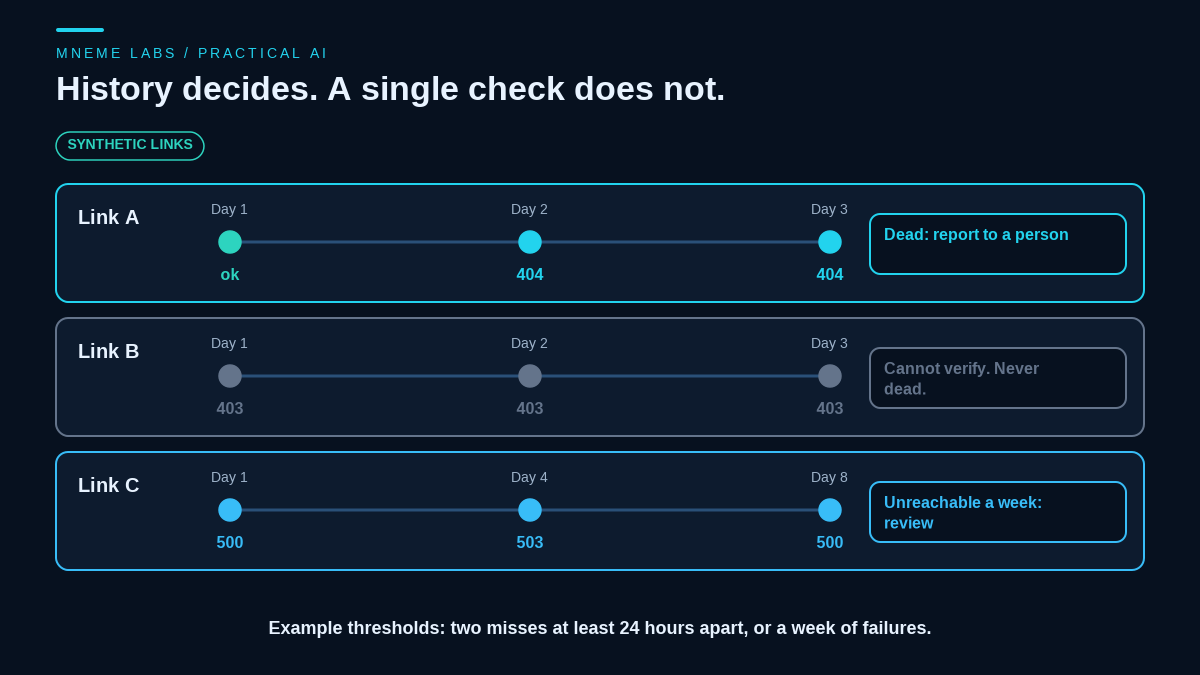
A 404 is not always dead, a 403 is not always broken, and a checker that follows every link can be steered into places it should never visit. This guide builds a careful link checker core and tests it against a local server that imitates each case.
Every morning at 6:47 AM, my phone buzzes with everything I need to know for the day. No apps to check. No scrolling. Just actionable intelligence in one text message.

My AI agent uploads 4-6 YouTube videos weekly with optimized titles, descriptions, tags, and thumbnails. Zero manual uploading. Here's the complete system.

My AI agent reads 200+ sources daily, filters for what matters, and sends me a 3-minute digest at 7 AM. Zero manual news checking. Always informed.

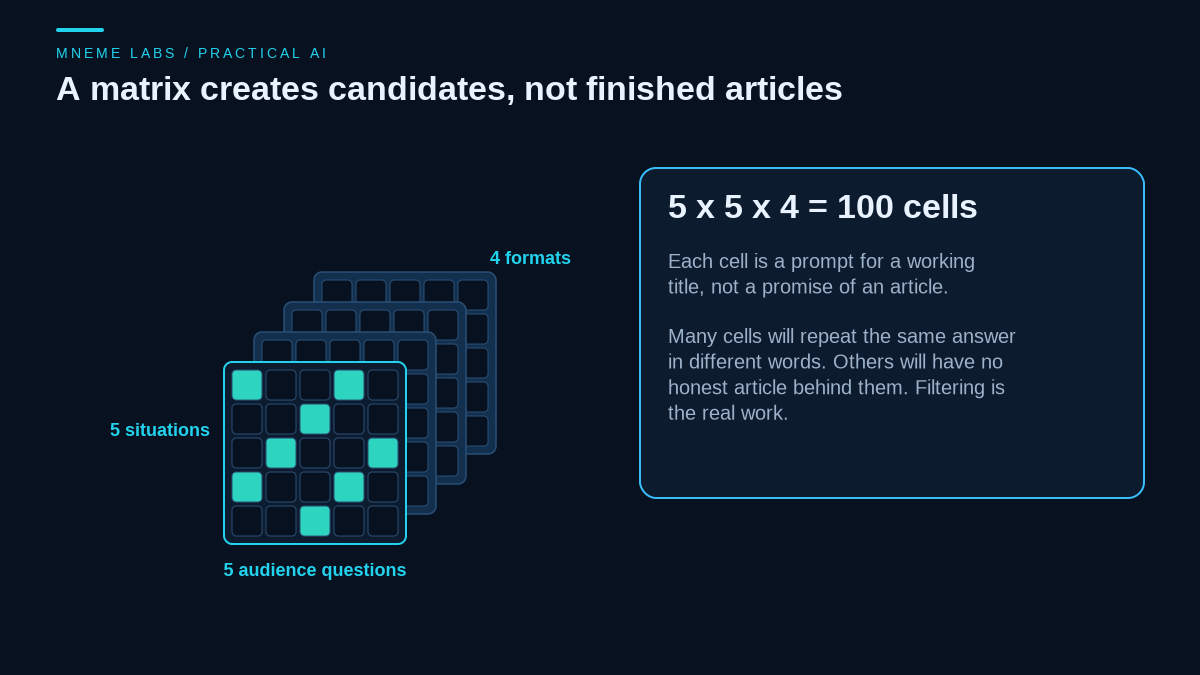
Use a 5 x 5 x 4 matrix to produce 100 candidate blog topics, then remove duplicates and poor fits. The 100 is a count of cells, not 100 articles worth writing.
My AI agent reads my drafts, analyzes past posts, and accesses research notes automatically. Here's how to safely give your agent local file access without compromising security.

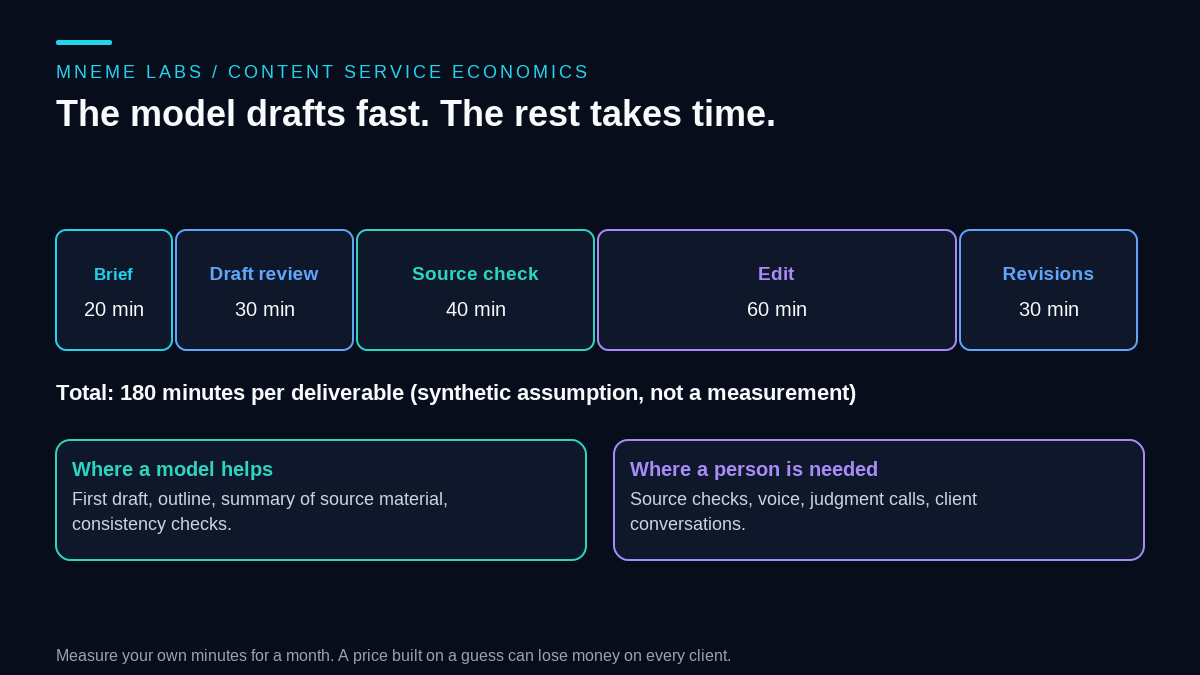
How to price and run an ongoing AI-assisted content service by counting the hours behind each deliverable. Covers revision limits, source checks, client sign-off, capacity, rights and scaled-content risk, with a tested Python margin sketch on invented numbers.
Generic AI content sounds robotic. I trained AI on my actual writing style and now it produces content that sounds exactly like me—readers can't tell the difference.

My AI agent does 40 hours of SEO research weekly—analyzing keywords, tracking competitors, finding content gaps, and delivering actionable insights. Here's the complete system.

I was drowning in 100+ DMs and comments daily. Now AI helps me reply to everyone personally in 20 minutes—boosting engagement 340% while saving 3+ hours per day.

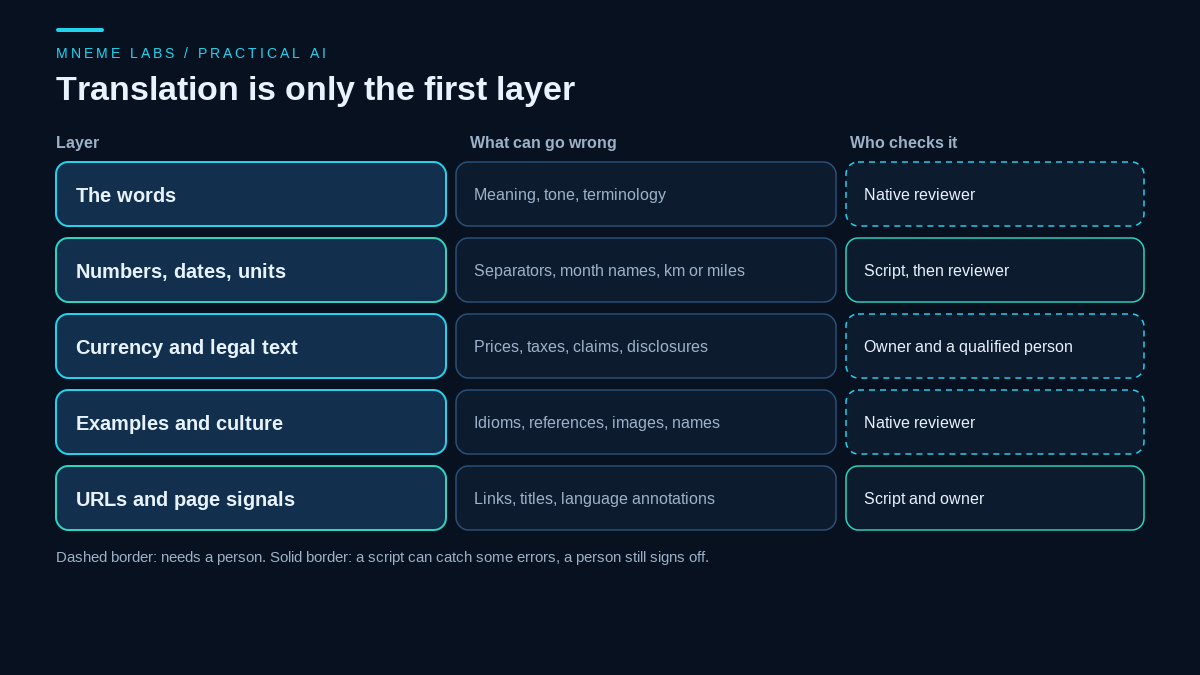
A practical workflow for localizing pages with an AI translation draft: choose languages from evidence, protect names and numbers, run a token check, get a native review for important claims, and set up hreflang correctly. Includes tested code and no promised results.
I was drowning in analytics data with no insights. Now AI analyzes my content performance in 5 minutes and tells me exactly what to do next. Here's the complete system.

I built a professional media kit in 45 minutes using AI that landed $23K in sponsorships in 60 days. Here's how to create yours without design skills.

I run a $18K/month AI-powered ghostwriting service for 12 creators. Here's my exact system for delivering high-quality content at scale while maintaining each client's unique voice.

I conducted 24 expert interviews in 3 weeks using AI for research, question generation, and transcription. Here's how to interview SMEs at scale without losing quality.

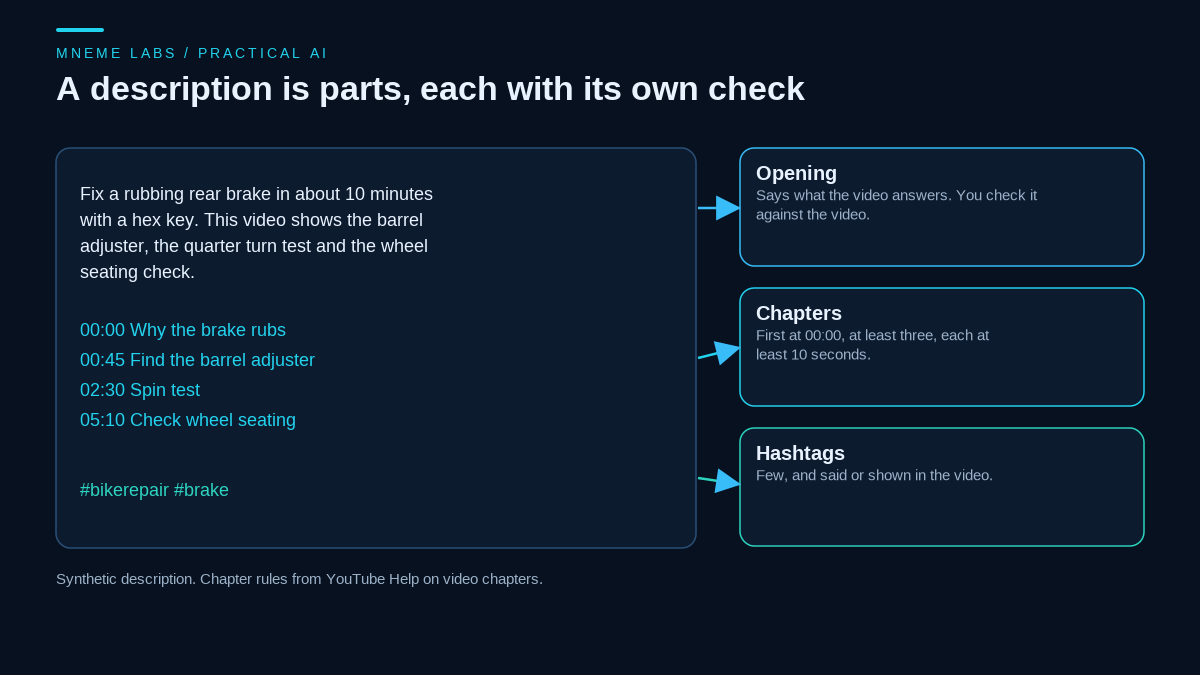
Use an AI draft for your video description, then verify it: chapters that follow YouTube's rules, claims that match the video, few tags, and no stuffing. Includes a tested lint script. No description can guarantee a ranking.
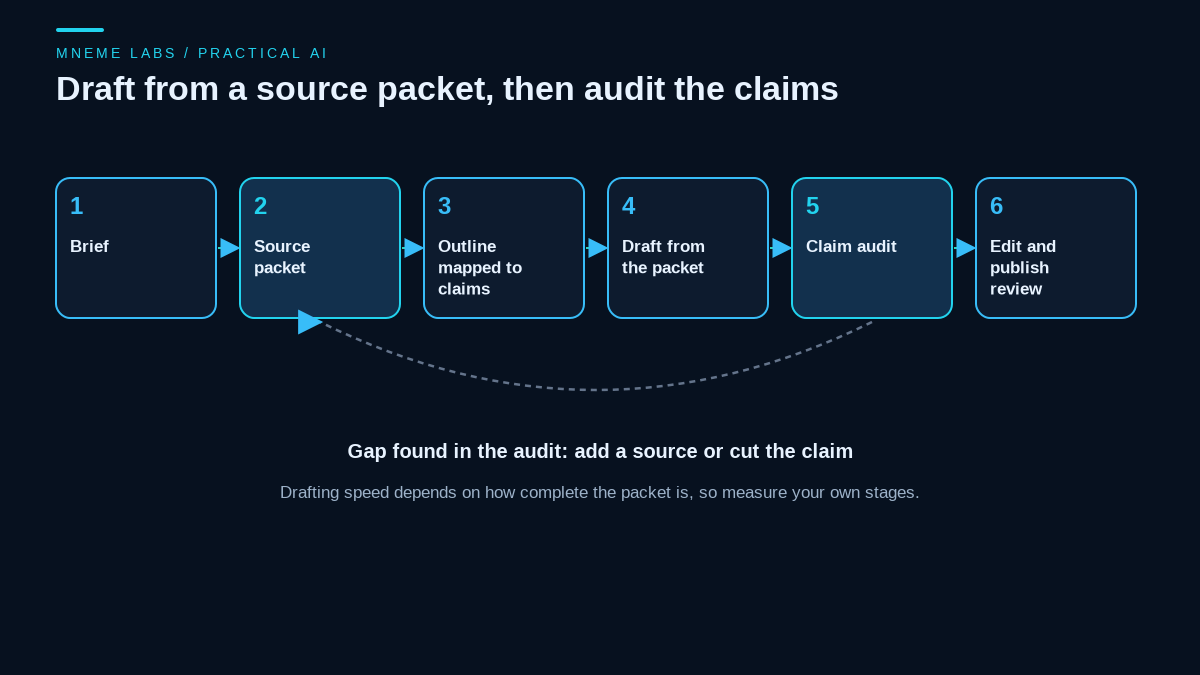
A drafting workflow that starts from a source packet, maps each claim to evidence, drafts section by section, and audits every claim before editing. No speed guarantees, just a process you can measure.
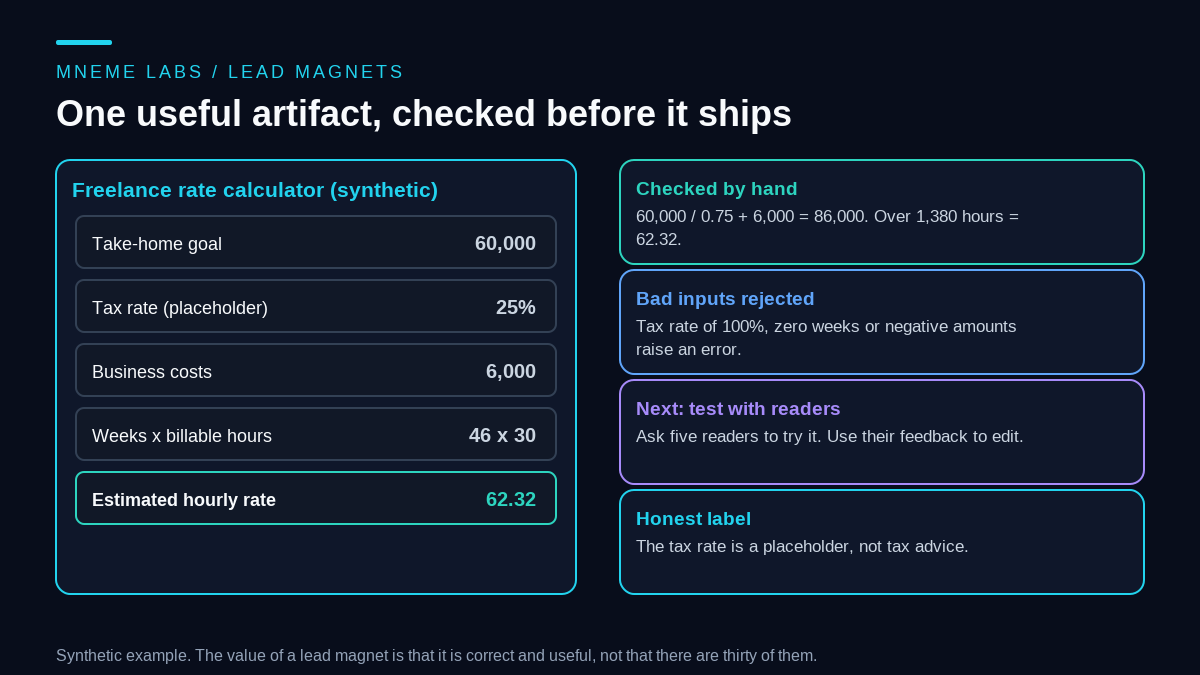
A lead magnet earns attention by being useful and correct. This guide builds one example, a freelance rate calculator, with AI help and hand checks, then covers a signup form that asks for clear consent, deliverability basics, and how to read signup numbers without overclaiming. Includes a tested Python calculator on synthetic inputs.



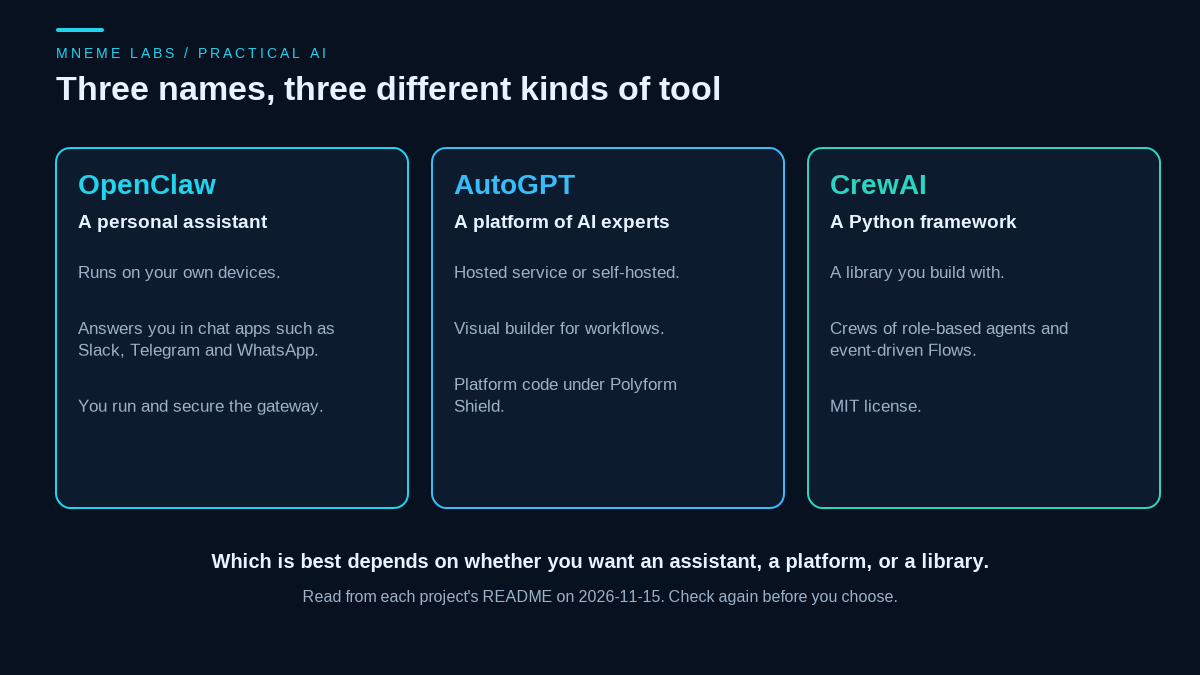
OpenClaw, AutoGPT and CrewAI are not three versions of the same product. This comparison is read from each project's own README, with licenses, release tags, requirements and cost shape, plus a small trial plan you can run yourself.

Creating fresh content for every platform was killing me. Built an AI repurposing system—now turning 1 blog post into 30+ platform-specific pieces in 15 minutes.

Manually checking for brand mentions across platforms took hours daily. AI social listening now monitors everything automatically—caught opportunities I would have missed.

You don't need expensive subscriptions to use AI. Here are 15 completely free AI tools I use daily for content creation, automation, and productivity—$0/month, professional results.

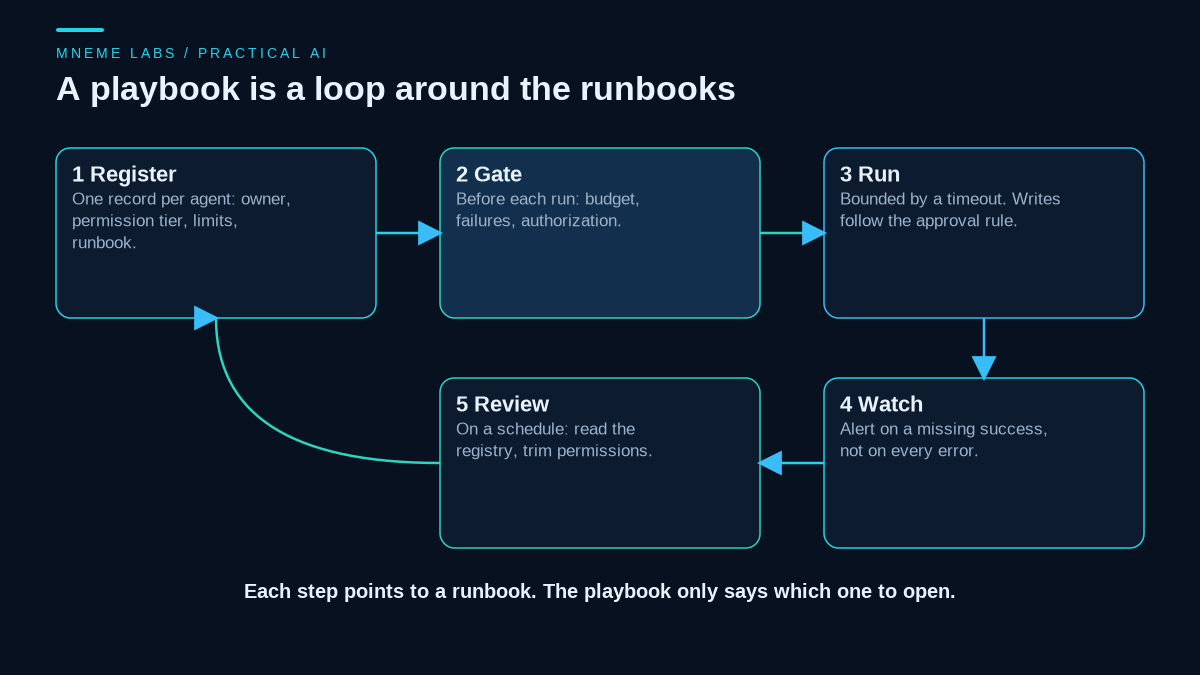
Once you run more than one agent, the hard part is coordination: who owns each one, what it may do, what stops it, and which runbook to open when it breaks. This playbook ties those pieces together with a tested registry audit.
Every AI tool, workflow, and system I use to run a 6-figure creator business in 15 hours/week. Nothing held back. This is my complete AI toolkit with exact costs, alternatives, and why I chose each one.

Everyone's confused about the difference. This simple guide explains what separates passive chatbots from autonomous AI agents—and why it matters for your business.

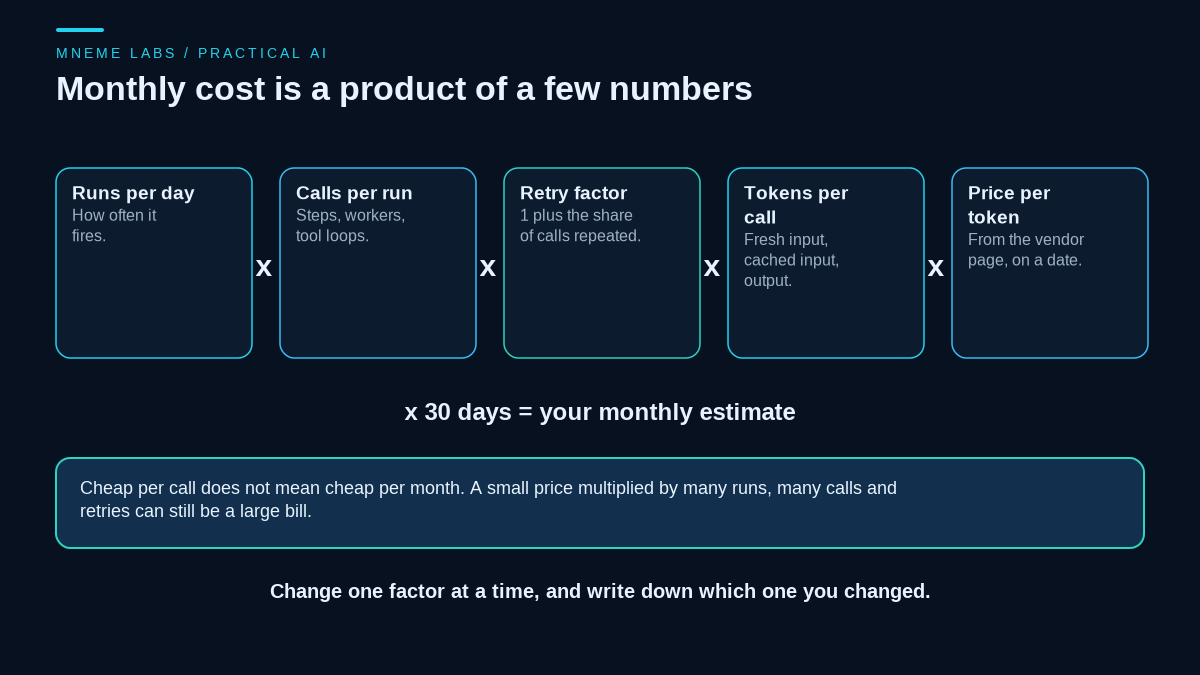
Agent cost is a product of runs, calls, retries, tokens and a per-token price. This guide gives you a worksheet with tested arithmetic, dated vendor rates as examples, and the checks that decide whether a saving is real.
My AI agent tracks 23 competitors 24/7, analyzing their content, performance, and strategy. Here's how I stay ahead without manual stalking.

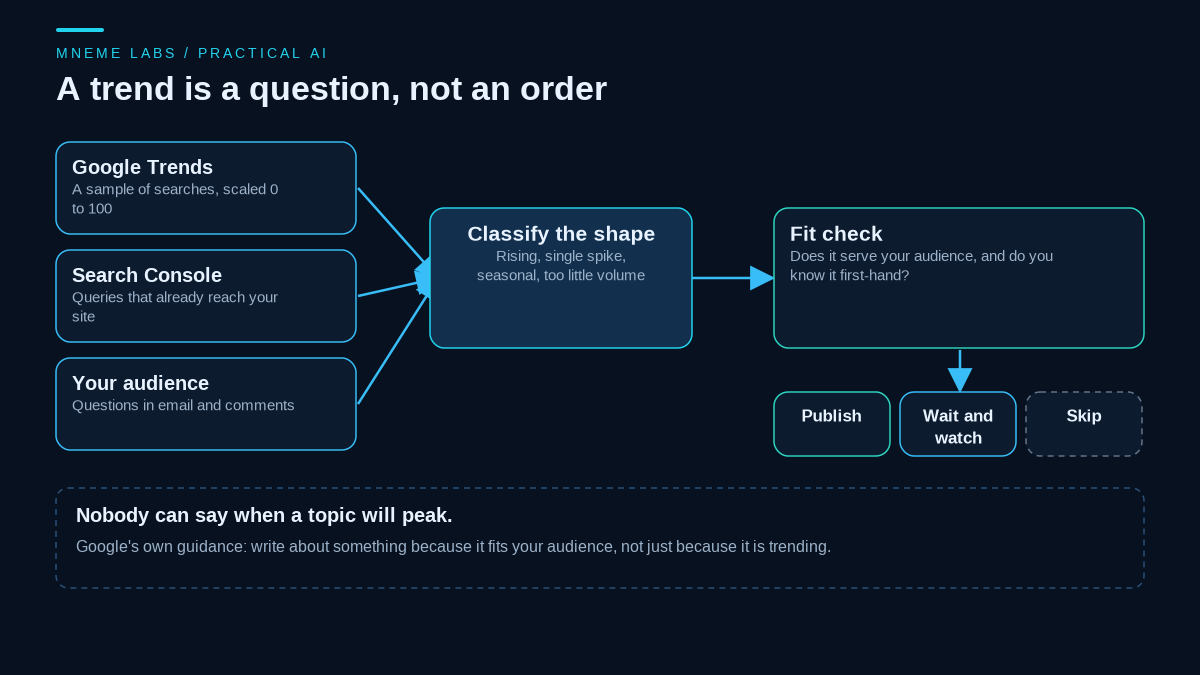
Nobody can reliably predict when a topic will peak. This guide shows how to read Google Trends and your own Search Console data honestly, how to label a series as rising, a spike, seasonal or too noisy with a tested script, and how AI helps with the language work.


I increased my CTR from 3.2% to 8.7% using AI-generated thumbnails. Here's my complete system for creating scroll-stopping thumbnails in under 5 minutes each.
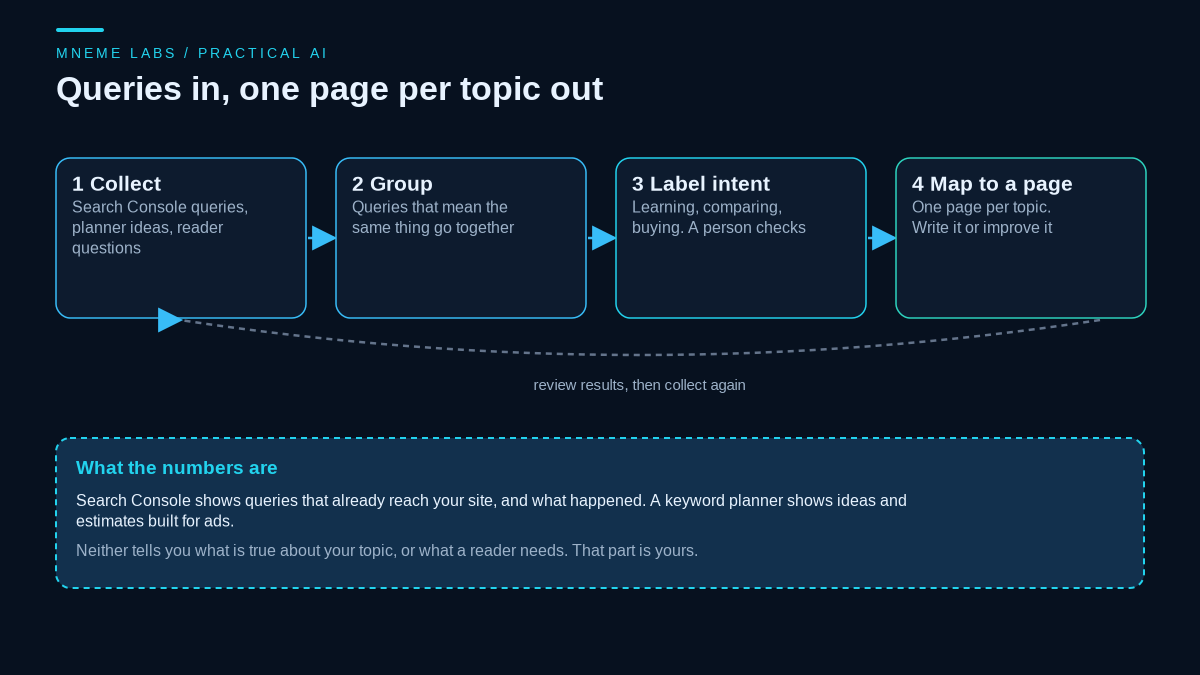
Use your own Search Console queries, a keyword planner as a secondary source, and an AI assistant for organizing, then group queries, label intent, and map each topic to one page. Includes a tested grouping script. No promise of rankings.
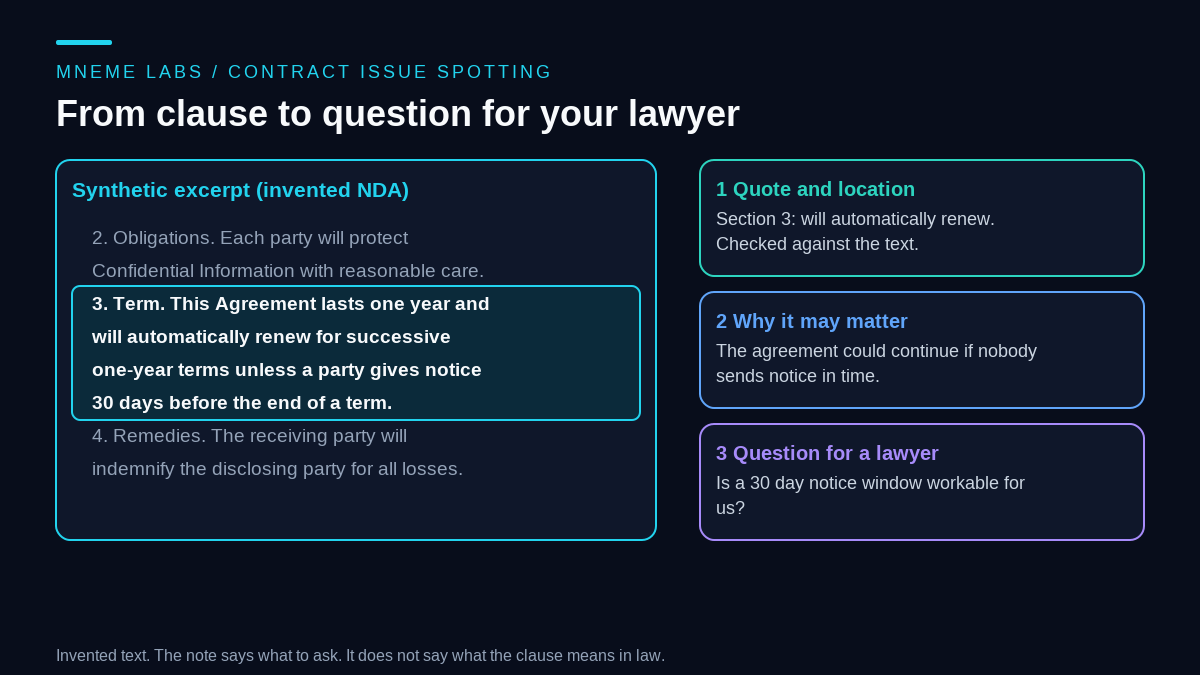
A careful way to use AI as a first reading of a contract: split it into numbered sections, ask for issues with exact quotes, verify every quote in code, and send a short question list to a lawyer. Includes a tested Python sketch on an invented NDA. It spots issues and gives no legal conclusions.
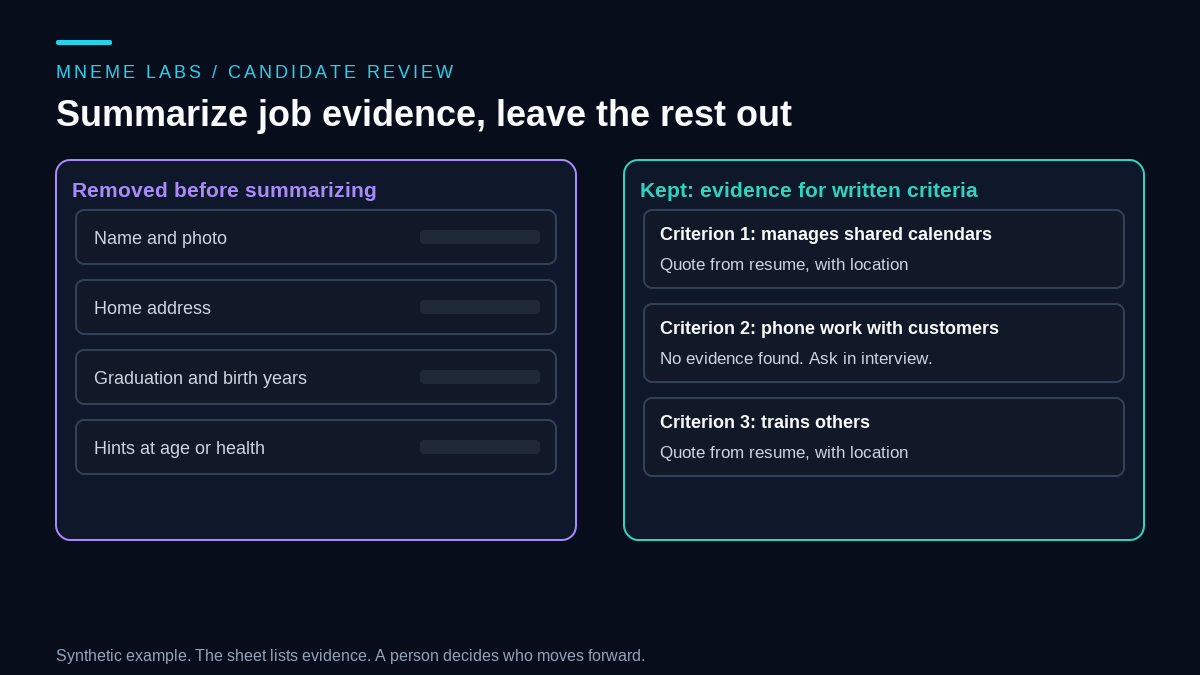
A way for a small employer to use AI to organize job-relevant evidence from applications while people make every decision. Covers written criteria, removing identifying fields, checking quotes against the resume, accommodations, and monitoring selection rates. Includes a tested Python sketch on synthetic data.
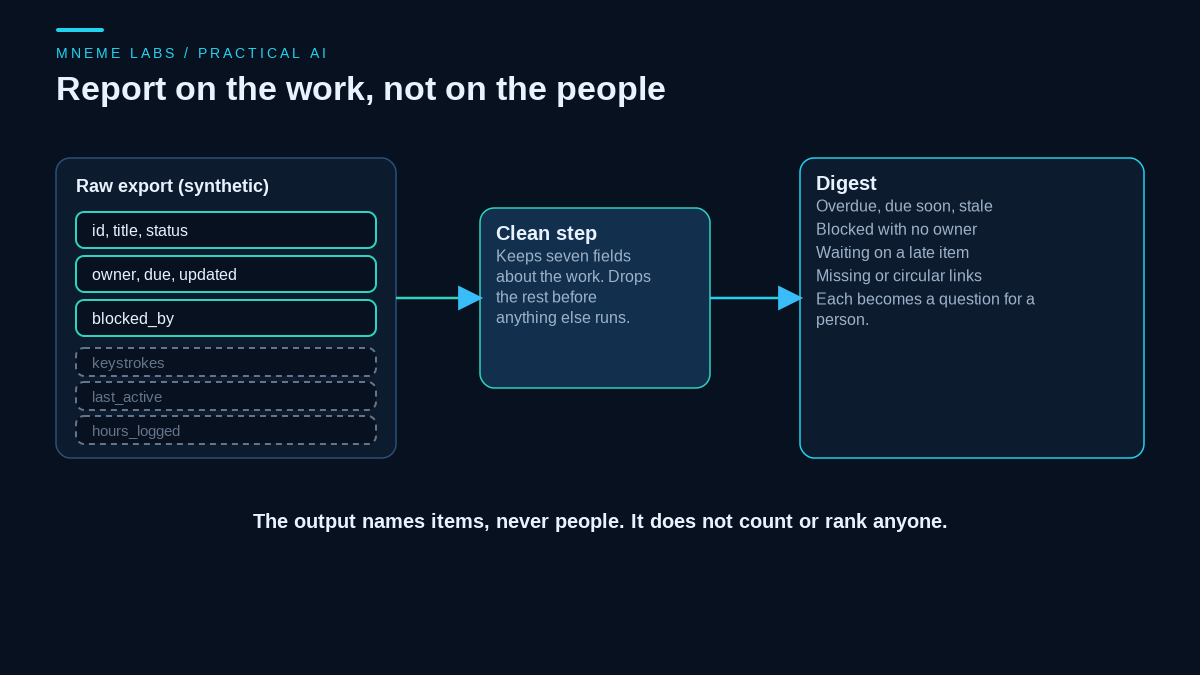
A status digest can save a team from chasing updates, or it can turn into surveillance. This guide builds a digest that reads work items and asks questions about them, drops activity data before it is used, and never ranks people.
How to build an inbox and calendar assistant that proposes changes instead of making them. Covers proposal records, event time zones, recurring series, attendees, notification choices, and review before anything changes.
Stop manually creating financial reports. AI agents can track revenue, expenses, cash flow, and profitability while providing actionable insights automatically.

Stop limiting your business to English-speaking markets. AI translation agents can localize content, handle customer support, and manage multilingual operations automatically.

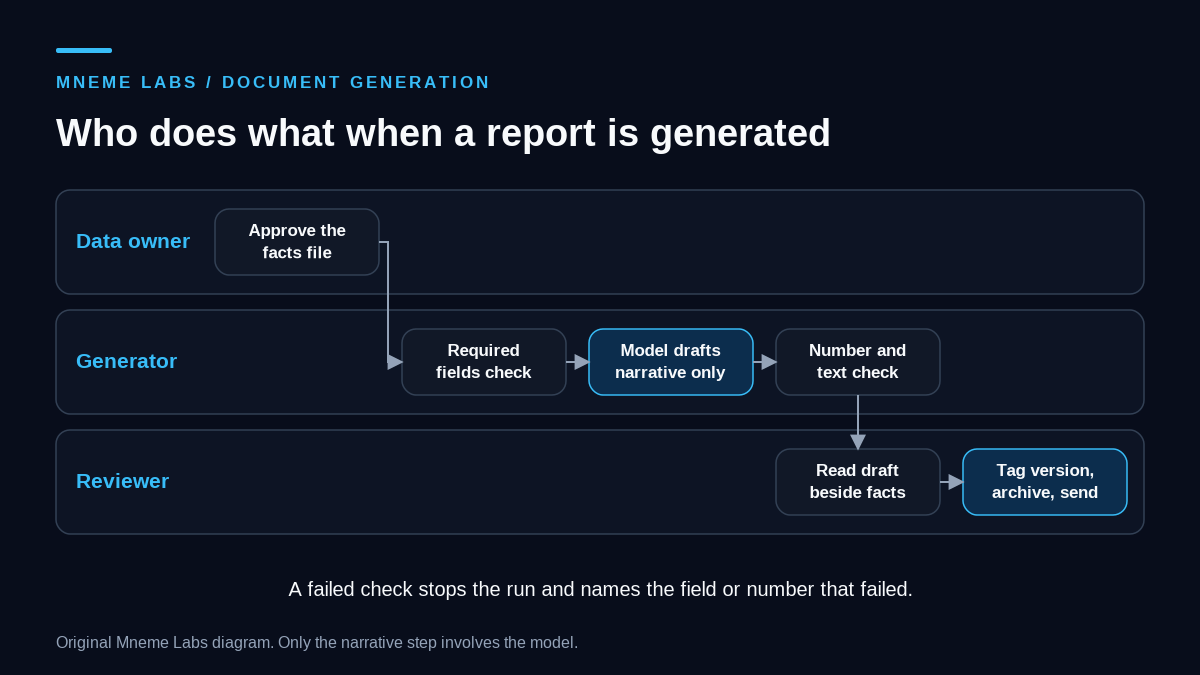
Generate status reports and proposal drafts from a checked facts file, a required-field gate, and a human review step. Includes a validation script, a version-tagging routine, and a clear rule for contracts: approved templates and qualified review only.
Stop manually stalking competitors. AI agents can monitor pricing changes, product updates, marketing campaigns, and content strategies automatically.

Stop losing track of information. AI agents can capture, organize, connect, and surface knowledge automatically—building a searchable second brain.

Single AI agents are powerful. But chaining multiple agents together creates workflows that handle entire processes end-to-end automatically.

AI agents are powerful but introduce new risks. Learn how to secure your agents, prevent failures, and build safety mechanisms into your automation.

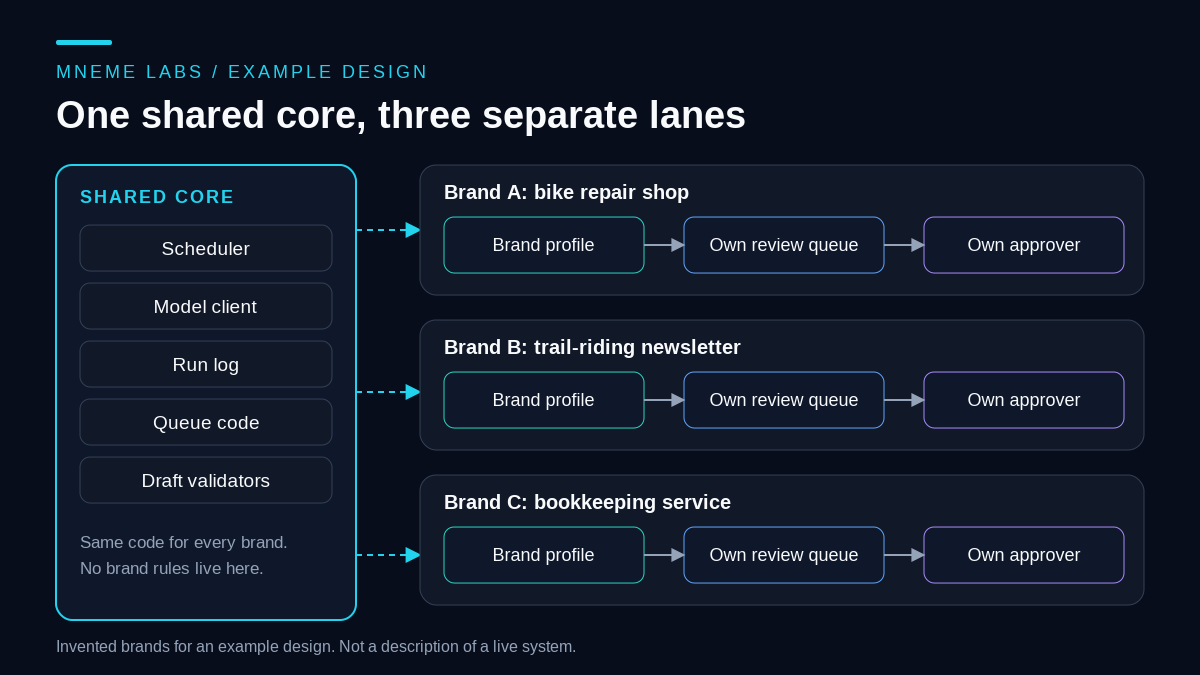
An example architecture for running three brands on shared AI workflow code while keeping voice rules, credentials, and approvals separate. A design sketch with invented brands, not a report on a live deployment.
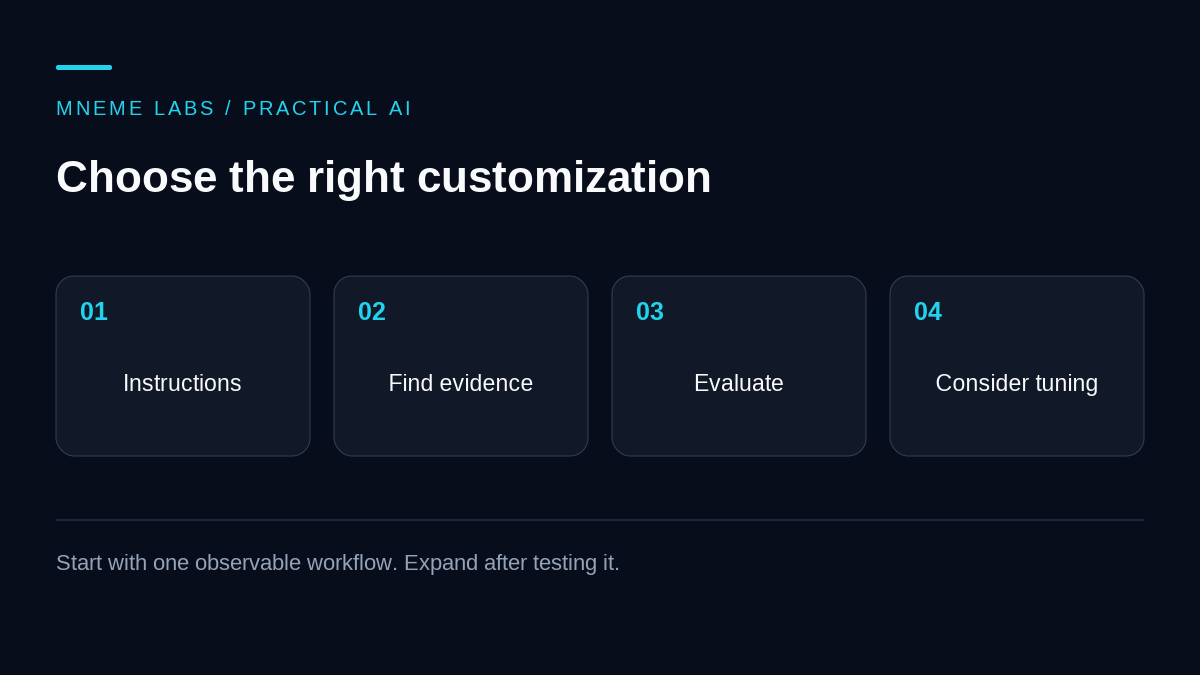
Choose between instructions, document retrieval, and fine-tuning. Build a local retrieval baseline, inspect its sources, and evaluate answers before adding model training.
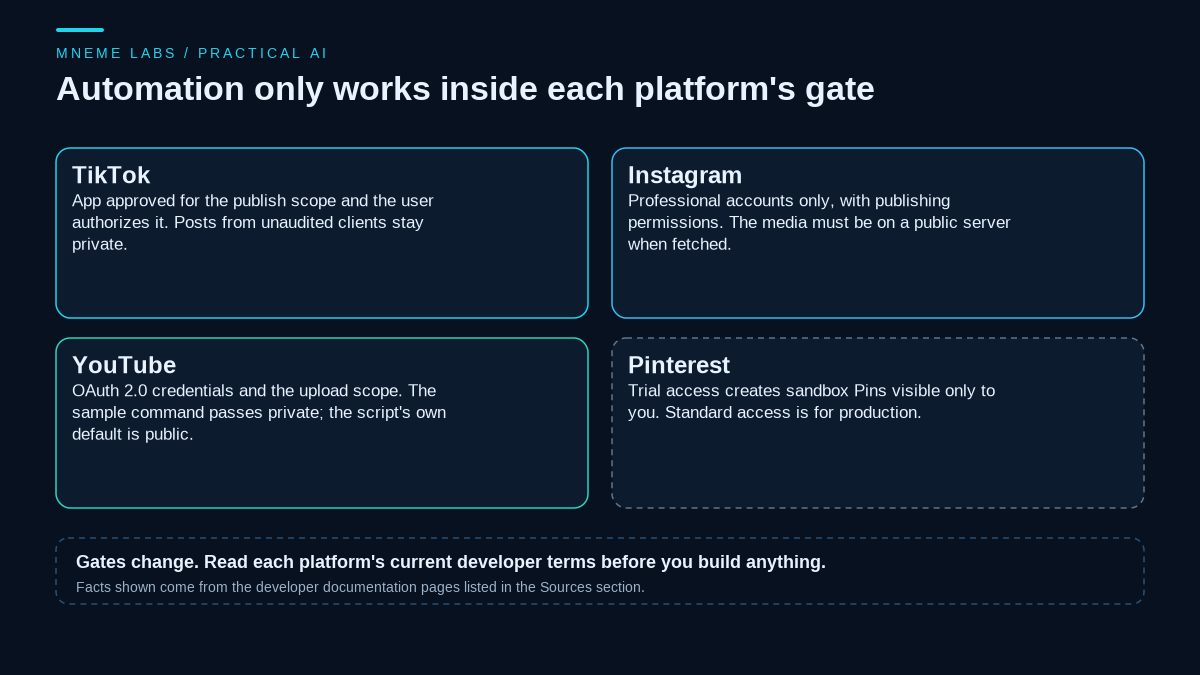
A safe design for scheduling social posts with AI help: drafts in a queue, a named human approver, platform-by-platform API gates, and a publishing worker that never blindly retries a write. Includes a tested worker with a fake adapter. No growth numbers promised.
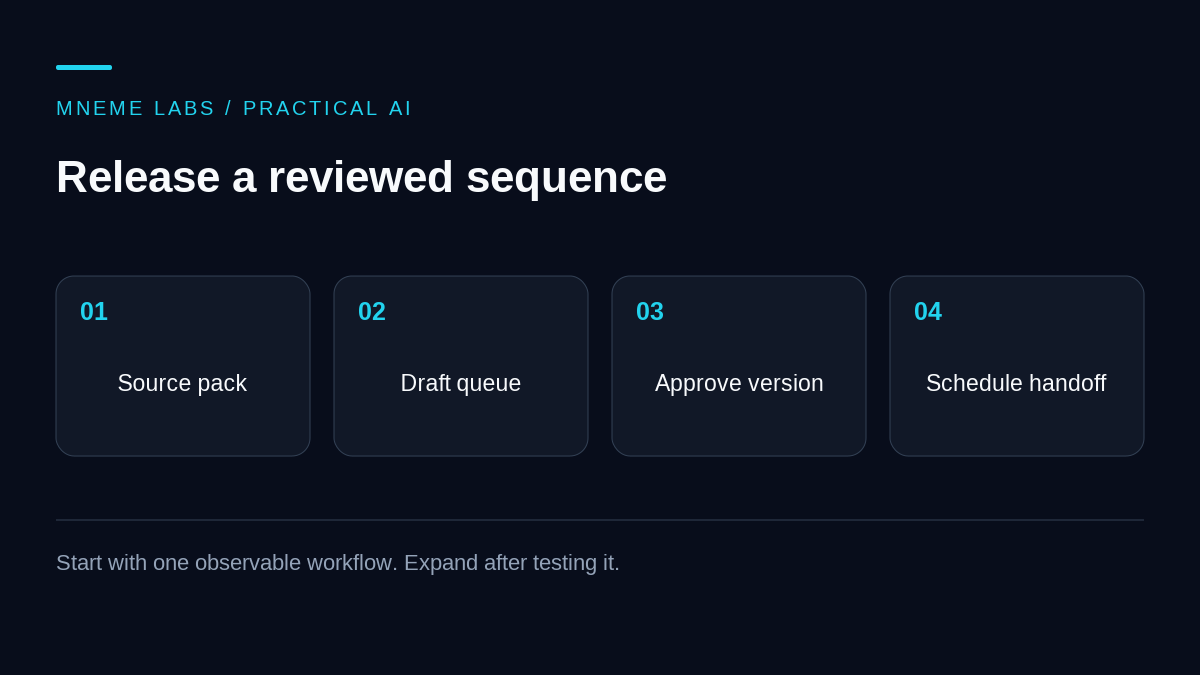
Design a content queue that separates AI drafts, human approval, scheduled handoff, and confirmed publication. Includes a runnable queue exporter and recovery rules.
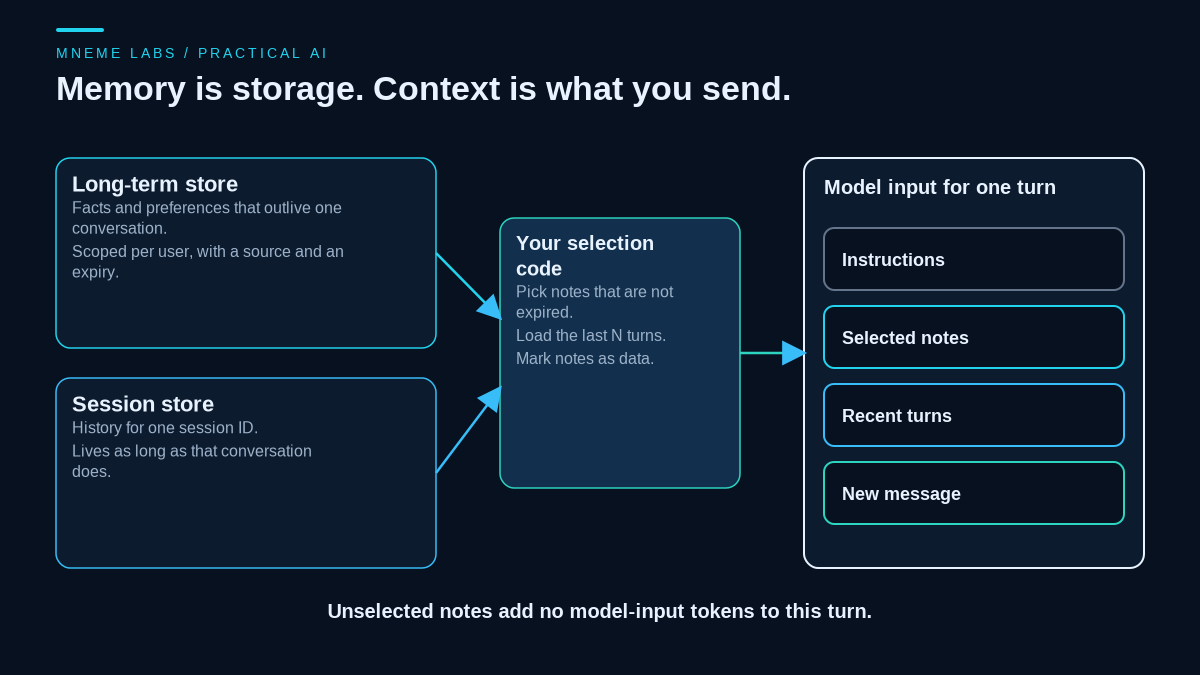
Three words get used for agent memory and they overlap. This guide separates the context window, the session store, and long-term memory, then builds a small tested example with expiry, sources, and per-user scoping.
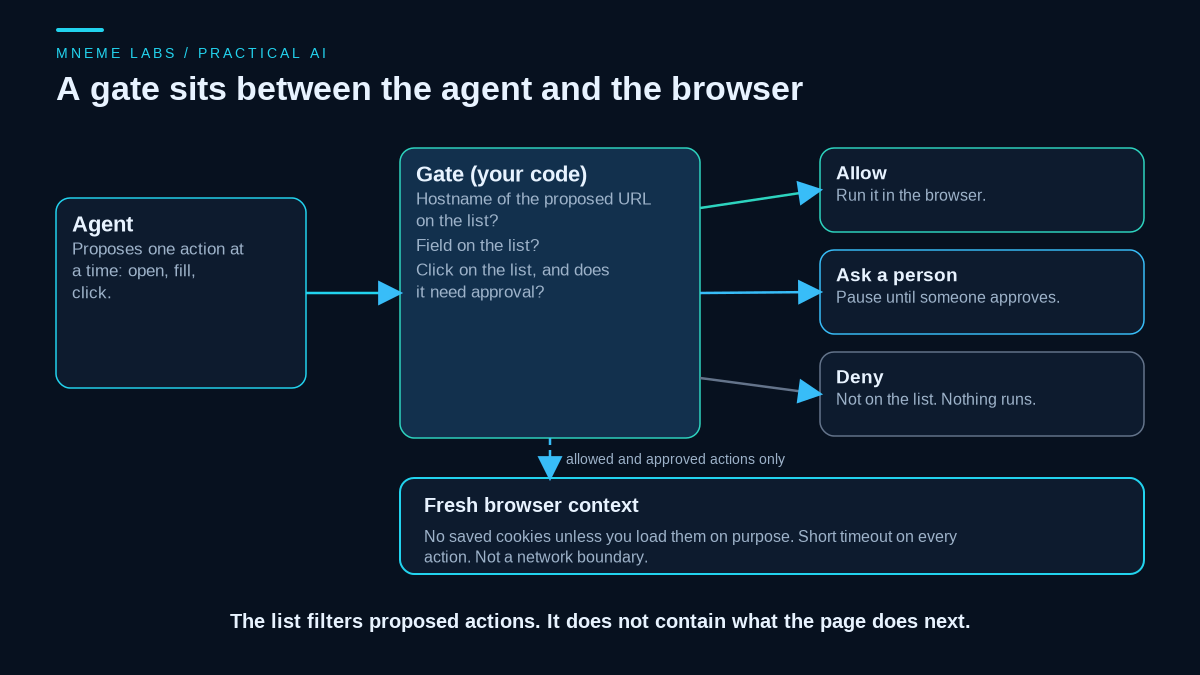
A browser lets an agent work with sites that have no API, and it also gives a mistaken or tricked agent a lot of reach. This guide builds a small action filter around Playwright, tests it on a synthetic page, and states what it does not contain.
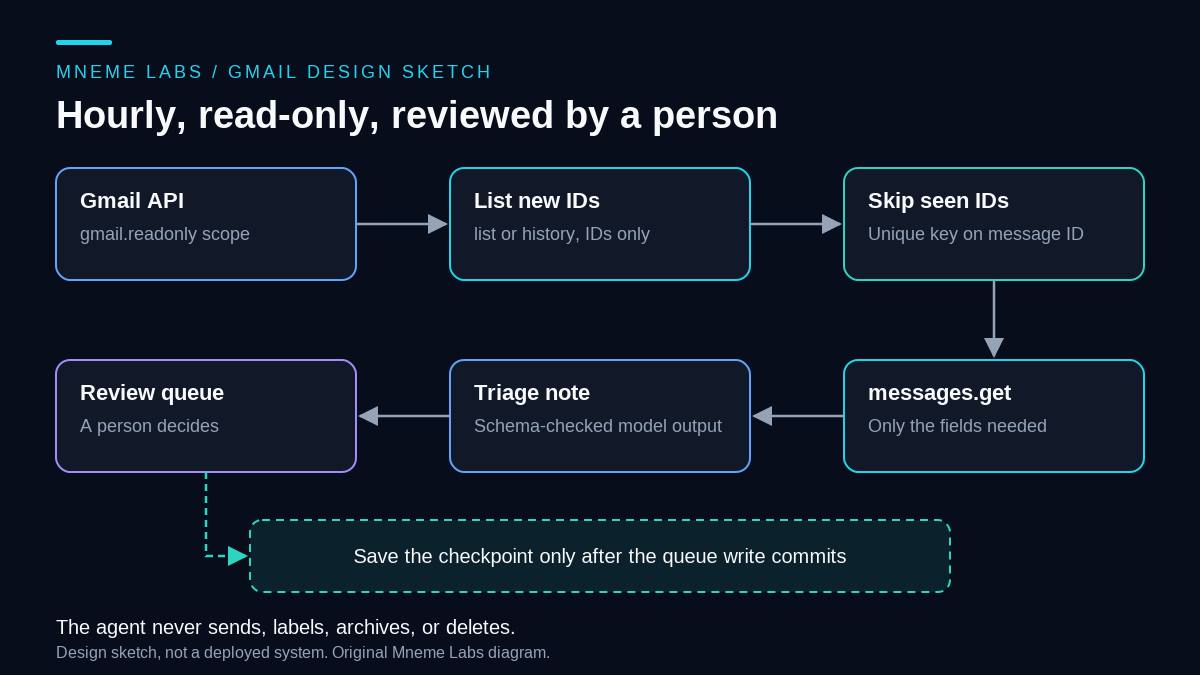
A specific design for an hourly, read-only Gmail check that writes triage notes into a review queue. Covers OAuth scopes, list versus get, pagination, deduplication, checkpoints, timezones, and auth failures. A design sketch, not a deployed system.
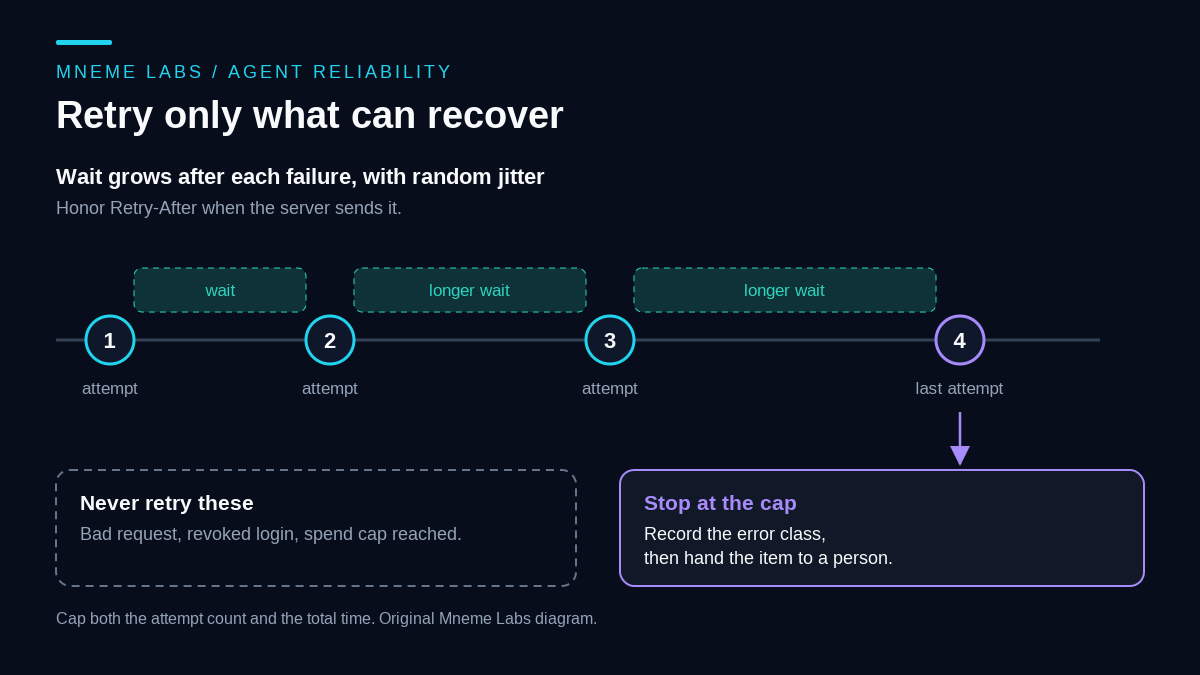
How to sort agent failures into transient, permanent, needs-a-person, and ambiguous, apply capped backoff with jitter, and make side effects safe to repeat. Includes a Python sketch and a failure-injection checklist.
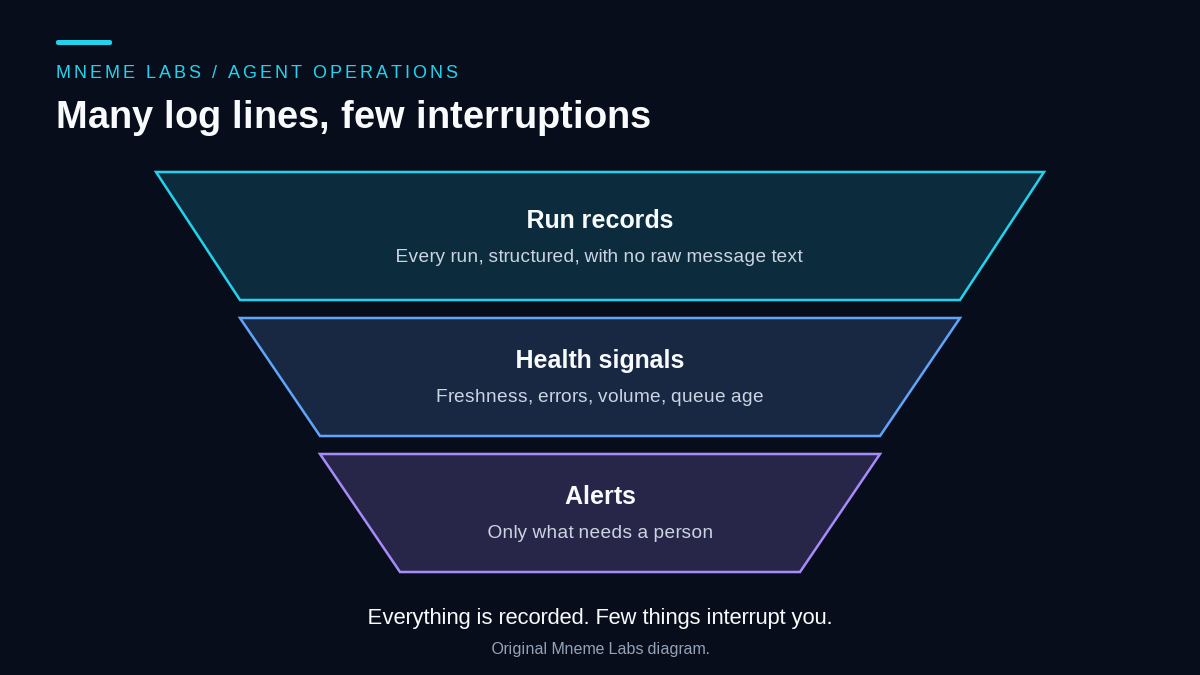
A practical monitoring design for scheduled AI agents: one structured record per run, a few health signals, a review-queue check, and alert rules that avoid noise, without logging raw customer data.
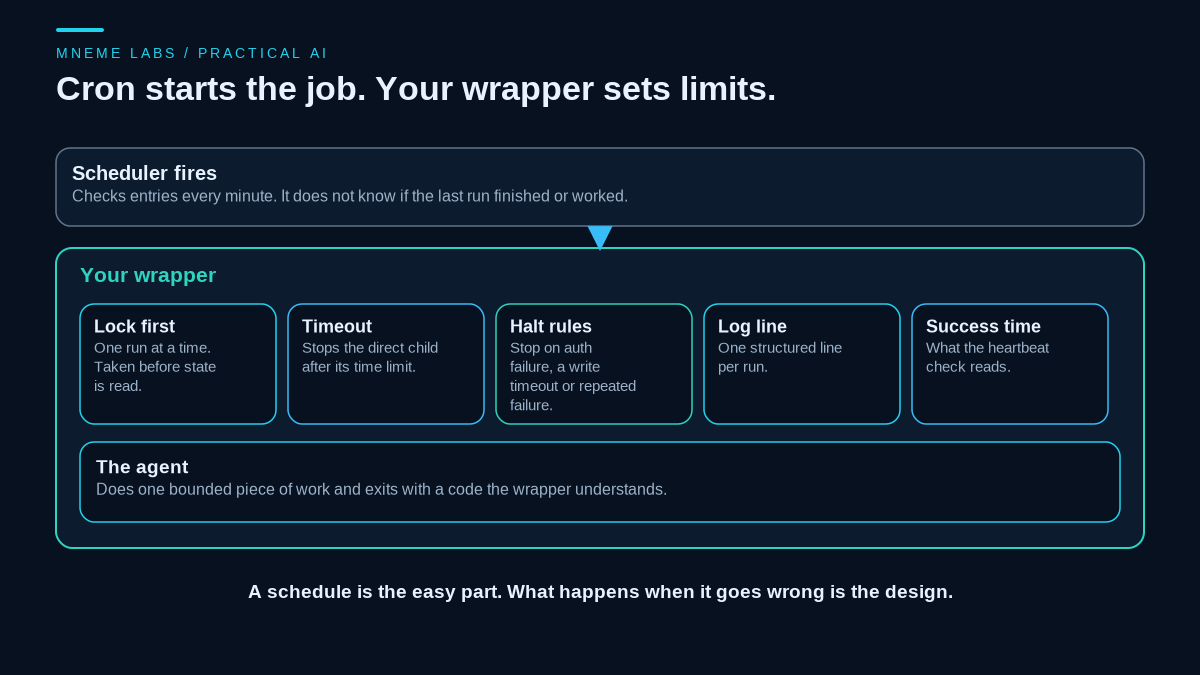
Cron will start your agent on time. It will not stop two runs from overlapping, kill a stuck call, or notice that the last ten runs failed. This guide builds a small wrapper that does those things and tests it on synthetic jobs.
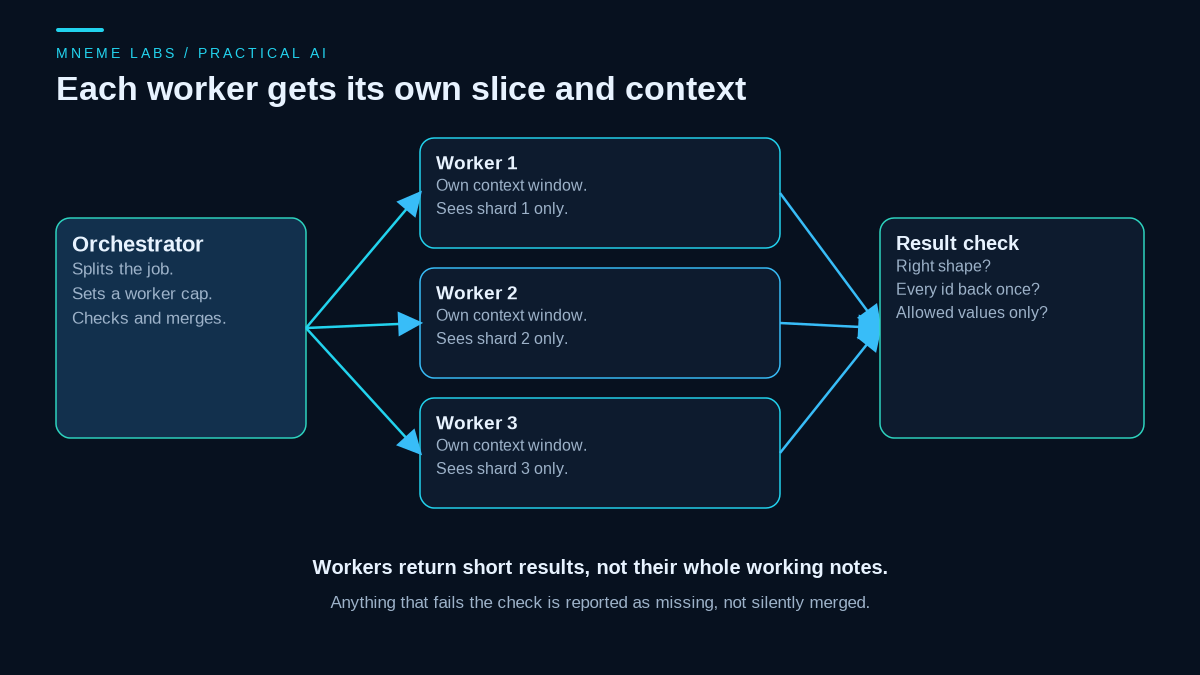
A sub-agent is a separate worker with its own context that returns a short result to a lead agent. This guide covers when splitting work helps, when it only adds cost, and a tested orchestrator that checks every worker's output.
**AI Agents vs AI IDEs — What’s the Difference**

Building a Multi-Agent Workflow for Your Business

**How to Give Your AI Agent Long‑Term Memory**

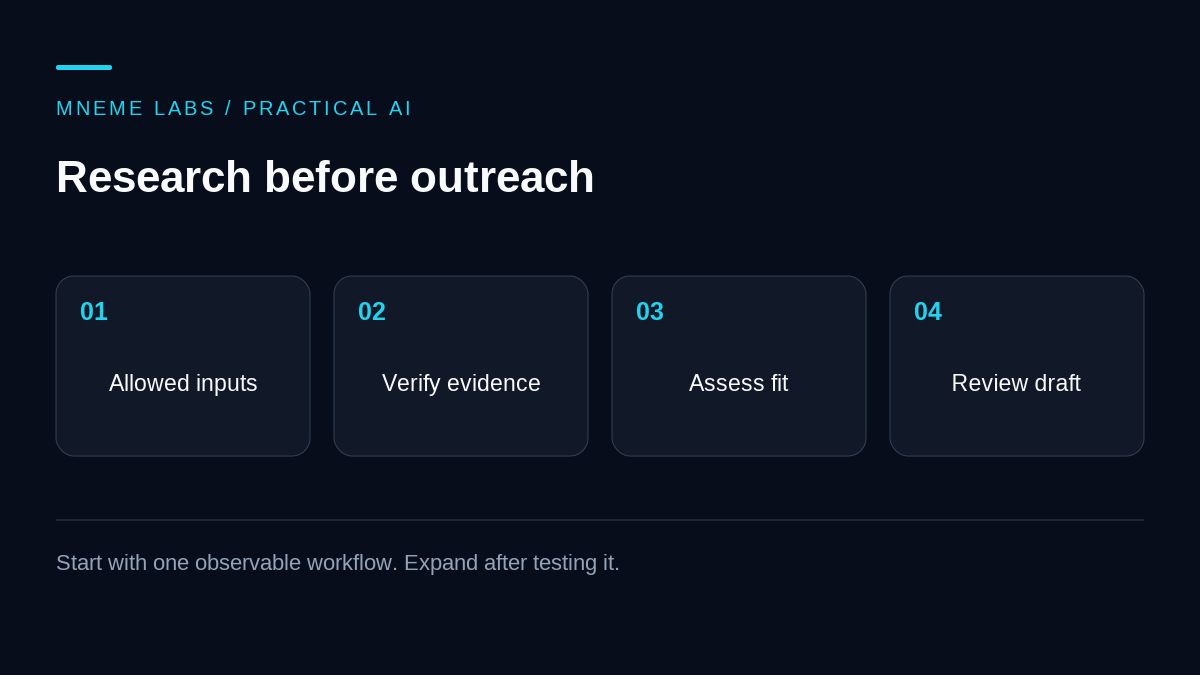
Build a lead research workflow with permissioned inputs, evidence-backed qualification, duplicate checks, AI-assisted drafts, and a human review queue. Includes a runnable CSV example.
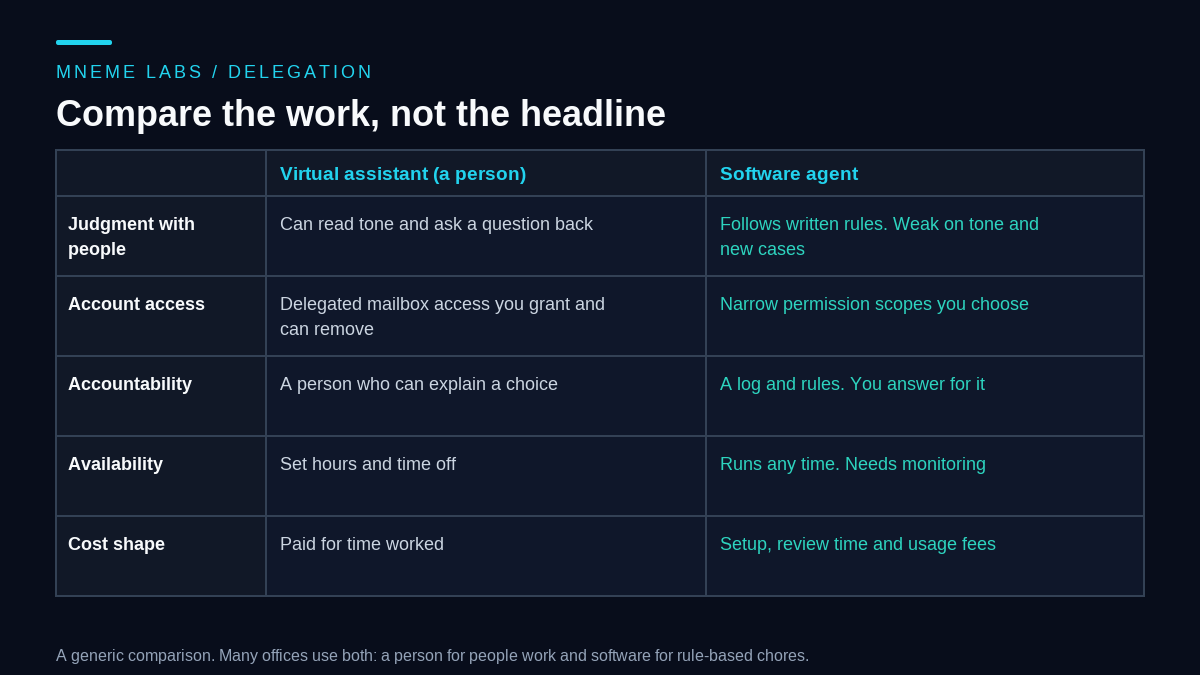
A comparison of what a virtual assistant and a software agent each do well, how account access differs, why review time belongs in the cost, and how to sort a task list into person, approval and automation lanes. Includes a tested Python sketch on synthetic tasks and made-up rates.
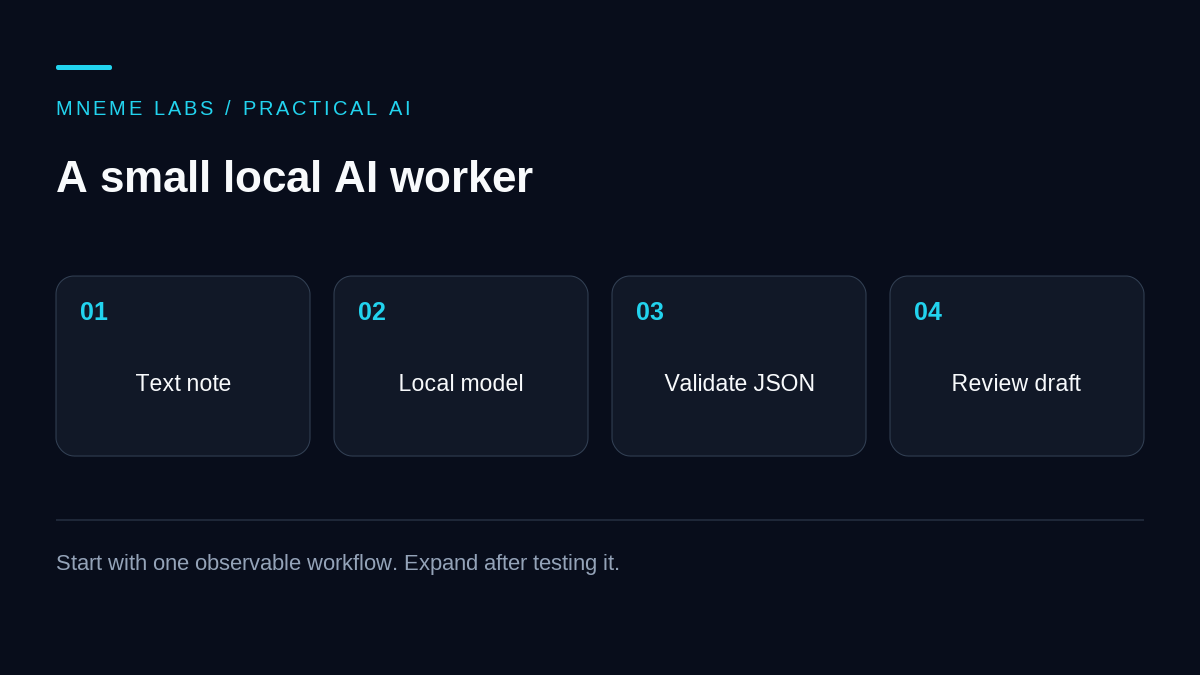
Build a small local AI worker that reads a text note, produces a structured draft, and leaves it for review. Includes runnable Python, failure checks, and clear limits.
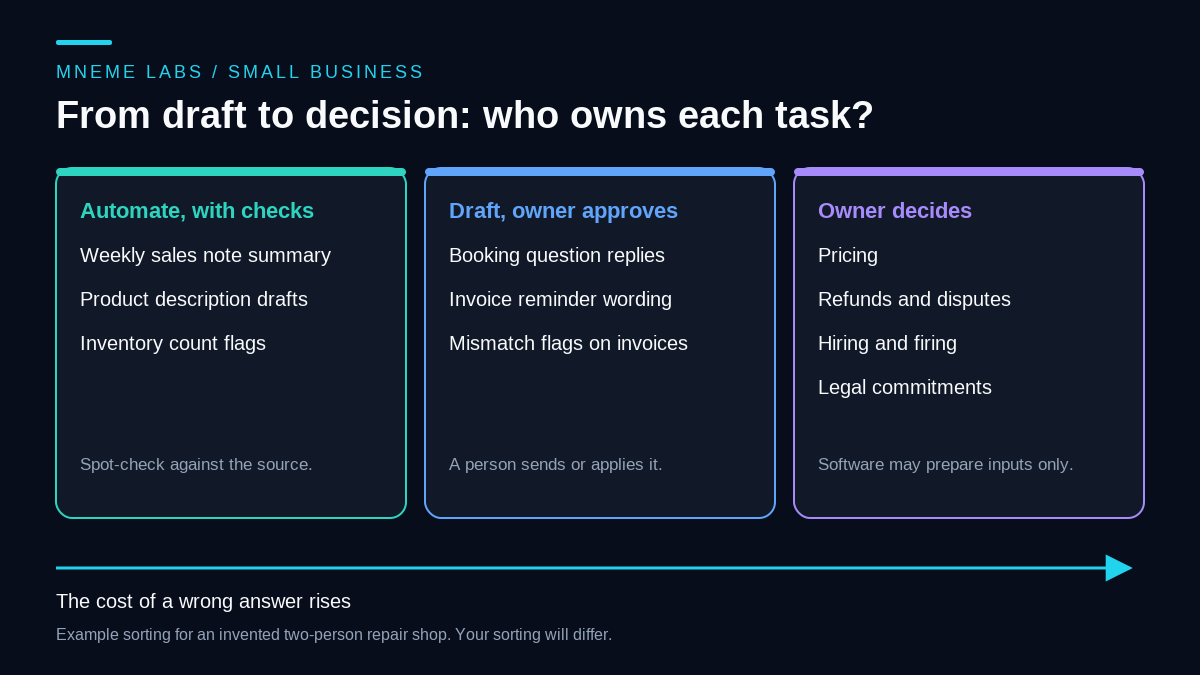
A method for choosing which small-business tasks to delegate to an AI workflow, estimating whether it saves time, and setting limits on what it may do. Uses an invented repair shop as the worked example.
If you’re still manually prompting a chatbot to draft your newsletter, then copying that text into a scheduler to post on LinkedIn, you are already behind. The creator economy in 2026 isn’t about who...